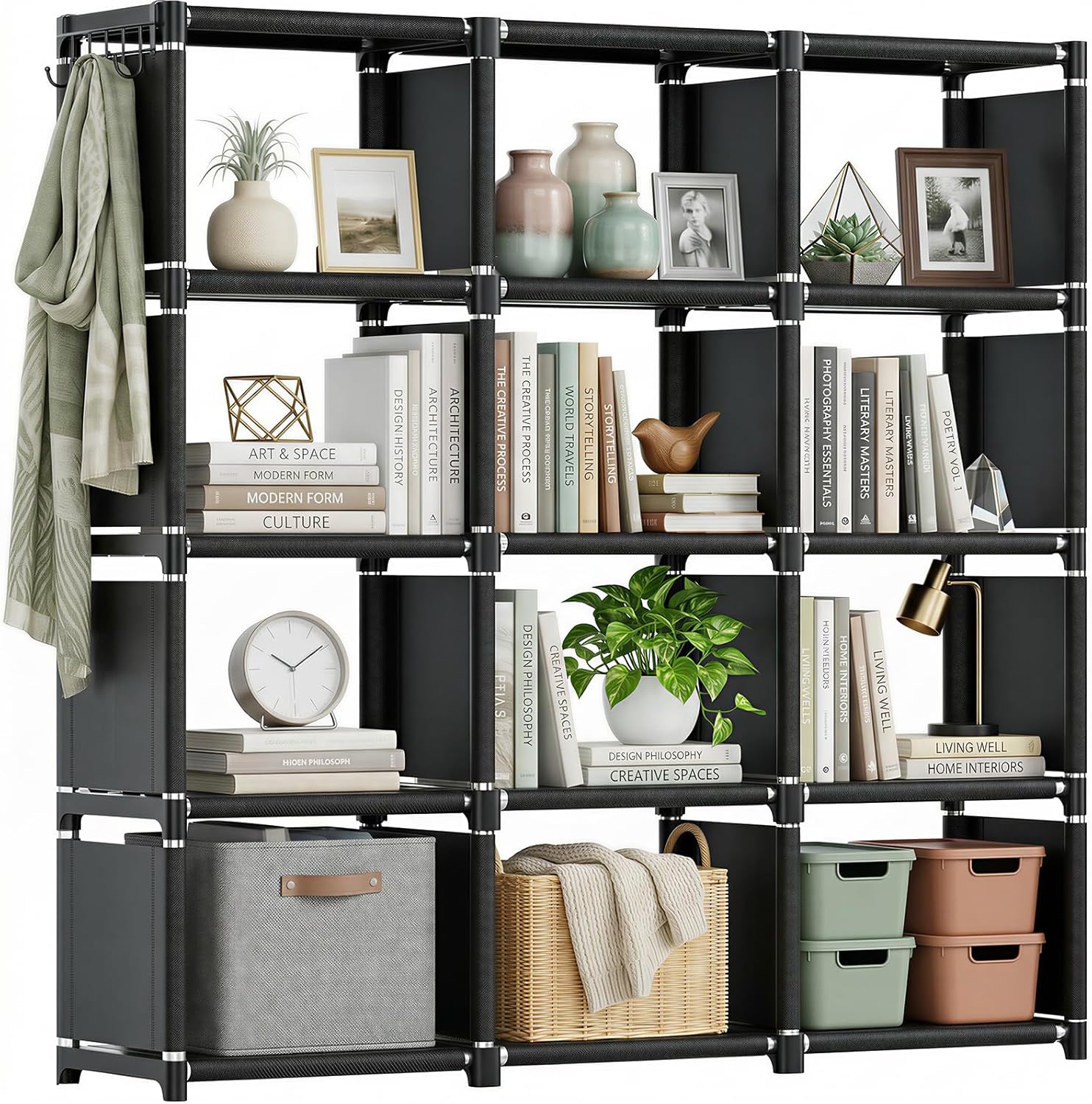
How to Style Open Shelves So They Look Tidy, Not Cluttered
Last updated: 2026-07-19 · 5 min read

Open shelves are one of those design choices that look effortless in photos and slightly terrifying in real life. One wrong move and you have a wall of stuff instead of a wall of style. The good news: there is a system to it, and once you see it, you cannot unsee it. Here is exactly how to get there.
Start by Clearing Everything Off
This is not optional. Do not try to style around what is already there. Pull everything off, wipe down the shelves, and start with a blank surface.
Once it is empty, you will notice things you stopped seeing months ago: a mug from a place you never actually liked, three half-used candles, something that belongs in a closet. Now is when you edit. A good rule of thumb is to put back no more than 60 to 70 percent of what you removed. The empty space is not wasted. It is doing real work.
Work in Odd Numbers and Vary the Heights
Our brains read odd-numbered groupings as intentional. Three objects feel curated. Four feel like they multiplied on their own. Aim for groups of three or five within each shelf zone.
Within each grouping, vary the height. Put a tall item next to a short one next to a medium one. This creates a visual rhythm that keeps the eye moving instead of getting stuck. A general target: your tallest item in a grouping should be roughly twice the height of your shortest. That contrast is what makes a shelf feel styled rather than stored.
Use Containers to Corral the Small Stuff
Loose small objects are the enemy of a tidy open shelf. A stack of books looks intentional. Seventeen individual items scattered across the same space looks like a junk drawer went vertical.
Group small things into containers that earn their spot visually. Glass jars are my go-to because they add texture while keeping things contained. Glass Apothecary Storage Jars (6-Set) work especially well on kitchen or living room shelves because the glass reads as light and open, not heavy. For items that need to stay airtight or stay put, Airtight Glass Storage Container give you that same clean look with a practical seal.
If you are styling a shelf in a home office or entryway, a small lidded box handles the odds and ends that have no other home. Large Bamboo Storage Box with Lock is solid enough to anchor a shelf without looking like storage furniture.
Follow the Rule of Three Visual Categories
Every shelf should contain a mix of three types of things: something functional, something with texture, and something with height. This is the simplest framework I know for making a shelf feel complete without overthinking it.
Functional might be books, a small plant, or a container you actually use. Texture might be a woven basket, a ceramic piece, or a wood object. Height might be a tall vase, a stack of books standing upright, or a candle on a small riser.
You do not need all three on every single shelf, but across the full shelving unit, all three should be present. If you look at your shelves and everything is the same material, the same color, or the same height, that is your problem.
Create Depth by Layering Front to Back
Most people style shelves in a single plane. Everything sits at the front edge, lined up like a class photo. The fix is simple: use depth.
Put larger or taller items toward the back of the shelf and let smaller items live at the front. You can also lean something against the back wall, like a small framed print or a cutting board in the kitchen, and layer items in front of it. This makes the shelf feel intentional and almost editorial.
If your shelves are adjustable, make sure you are actually using the right shelf heights for what you are displaying. A shelf set at 14 inches of clearance for a group of small objects just creates awkward empty air above them. Adjust the spacing to fit the contents, not the other way around.
Keep a Consistent Color Story
You do not need to go monochromatic, but you do need a thread. Pick two or three colors and let everything on the shelves relate back to them. This is where my fiance and I do our best negotiating. I want uniformity; they want the shelf to feel alive. The answer we keep landing on: a neutral base with one warm accent color repeated two or three times across the whole unit. It looks collected, not coordinated.
If you have books, face a few of them spine-out and turn others around so the pages face out instead. A row of cream-colored page edges on a dark shelf adds instant warmth without adding visual noise. For shelves holding practical items like food containers or pantry goods, matching containers make a huge difference. Airtight Food Storage Containers (24-Pack) on a kitchen open shelf turns a utilitarian necessity into something that actually looks good.
For a shelf that needs to hold floating storage without drilling into a tricky wall, Acrylic Floating Wall Shelves (4-Pack) give you a clean surface that disappears into the wall and lets the objects do the talking.
Edit Regularly, Not Just Once
Styled shelves drift. Something gets set down, something gets added without thinking, and six weeks later you are back to clutter. The fix is a monthly reset, not a full overhaul. Just take five minutes to remove anything that snuck onto the shelf without a formal invitation, straighten what has shifted, and check that your groupings still have breathing room.
Think of it less like a decorating project and more like a habit. The shelves look good because you maintain them, not because you styled them perfectly once and hoped for the best.
The takeaway: Open shelves work when there is a system behind them. Clear the surface, edit down to 60 to 70 percent capacity, group in odd numbers, vary heights, and keep a consistent color thread. Use containers for small items, layer front to back for depth, and do a quick reset every few weeks. That is genuinely all it takes to go from cluttered to calm.
Everything mentioned in this guide
Glass Apothecary Storage Jars (6-Set)
View product →
Airtight Glass Storage Container

Large Bamboo Storage Box with Lock
View product →
Airtight Food Storage Containers (24-Pack)
View product →
Acrylic Floating Wall Shelves (4-Pack)
View product →