Studio Apartment Organization: Living Big in a Small Space
Last updated: 2026-07-14 · 5 min read

A studio apartment asks you to do something genuinely difficult: sleep, eat, work, and relax in one room without losing your mind. I have enormous respect for anyone who pulls this off well, because the margin for chaos is basically zero. One pile of mail on the counter and suddenly the whole space feels like it has given up. The good news is that small spaces reward systems more than big ones do. There is nowhere for disorder to hide, which means every good decision you make is immediately visible and immediately worth it. Here is how to set up a studio that actually functions.
Define Your Zones Before You Buy Anything
The single most important thing you can do in a studio is decide where each part of your life lives. Sleep zone, work zone, eating zone, lounge zone. These do not need walls. They just need to be intentional.
Walk your space with a tape measure and a piece of paper. Sketch a rough floor plan. Assign each area a function and commit to it. A desk in the sleep zone sounds fine until you cannot stop checking email at midnight. A coffee table doubling as your dining table works great until you have nowhere to put a plate.
Once zones exist in your head, you can make furniture and storage decisions that reinforce them instead of fighting them. Everything that follows in this guide depends on this step.
Go Vertical on Every Wall You Have
Floor space is the scarce resource. Wall space is almost always underused. In a studio, your walls are storage.
Floating shelves above the desk hold books and files. Shelves above the bed handle extra linens or decorative bins. Shelves in the kitchen corner take on pantry duty. The Acrylic Floating Wall Shelves (4-Pack) Acrylic Floating Wall Shelves work especially well in tight spots because they disappear visually, keeping the room from feeling cluttered even when they are full.
Aim to get storage starting at about 60 inches off the floor and going up from there. That is the zone most people ignore, and it is valuable square footage sitting empty.
Compress and Contain Off-Season Items
In a studio, anything you are not actively using right now needs to take up as little space as possible. Off-season clothes, extra bedding, spare pillows: these are the usual culprits.
Vacuum storage bags are the move here. A full comforter compresses to a fraction of its size, and that fraction can slide under the bed or sit on a high shelf without dominating the room. The Vacuum Storage Bags with Hand Pump (20-Pack) Vacuum Storage Bags with Hand Pump come in a 20-pack, which gives you enough to handle clothes and bedding at the same time.
Label each bag before it goes into storage. I know that sounds fussy but six months from now you will not remember which bag has the flannel sheets and which has the summer quilt. A label takes ten seconds and saves a full unpack-and-repack session.
Make Your Door Work Harder
The back of every door in a studio is a storage opportunity most people leave blank. Bathroom door, closet door, front door: all fair game.
An over-the-door organizer with multiple shelves handles shoes, cleaning supplies, snacks, or accessories depending on where it hangs. The Over-the-Door Hanging Organizer (5-Shelf) Over-the-Door Hanging Organizer has five shelves and fits standard door widths without any drilling. In the bathroom, it takes the pressure off a tiny vanity. In the closet, it frees up hanging rod space.
If you rent and cannot put holes in walls, doors become even more important. Lean into them.
Organize the Kitchen for a One-Counter Life
Studio kitchens are frequently small enough that you have one usable stretch of counter, maybe two. Every item sitting on that counter needs to justify its presence daily.
Drawer dividers keep utensils and tools from becoming a loose pile that somehow eats half your prep time every morning. Bamboo Expandable Drawer Organizer the Bamboo Expandable Drawer Organizer adjusts to fit different drawer widths, which matters because studio kitchens rarely have standard cabinetry.
For the counter itself, keep only what you use every single day. Everything else finds a home in a cabinet or goes. A sink caddy keeps dish soap, a sponge, and a brush corralled instead of scattered. Small interventions, big difference when you are working with two feet of counter space.
Build a Living Area That Can Do Two Things
In a studio, your couch is also your reading chair. Your coffee table is also your dining table, possibly your work surface. Furniture that serves multiple functions is not a compromise; it is just good sense.
Storage ottomans, lift-top coffee tables, beds with built-in drawers: these are worth paying more for because they eliminate the need for additional furniture pieces. Every extra piece of furniture in a small space costs you floor real estate and visual calm.
My fiance pushed back when I wanted to add a second bookshelf to our last small place, and they were completely right. One well-organized shelf beats two messy ones every time, both practically and aesthetically. The 12-Cube Storage Bookshelf (Metal) 12-Cube Storage Bookshelf gives you serious capacity in a single footprint and works as a partial room divider between zones.
Tame Cords and Visual Noise
In a small space, visual clutter is just as exhausting as physical clutter. Cords snaking across the floor or tangled behind a desk make a room feel chaotic even if everything else is tidy.
A cable management box hides the power strip and excess cord length for your TV or desk setup. The Woven Cable Management Box (2-Pack) Woven Cable Management Box comes in a two-pack and looks intentional on a shelf rather than like something you are hiding in shame.
Beyond cords, think about surface discipline. Every flat surface in a studio is one bad week away from becoming a dumping ground. Designate what lives on each surface and give everything else a drawer or a bin. The fewer decisions you leave to tired-evening-you, the better the space holds together.
The takeaway: A studio apartment works when every inch has a job. Define your zones, go vertical, compress what you are not using, and make furniture and doors earn their keep. You do not need more space. You need better decisions about the space you have. Start with one zone this weekend, get it genuinely sorted, and let that momentum carry you into the next one.
Everything mentioned in this guide
Acrylic Floating Wall Shelves (4-Pack)
View product →
Vacuum Storage Bags with Hand Pump (20-Pack)
View product →
Over-the-Door Hanging Organizer (5-Shelf)
View product →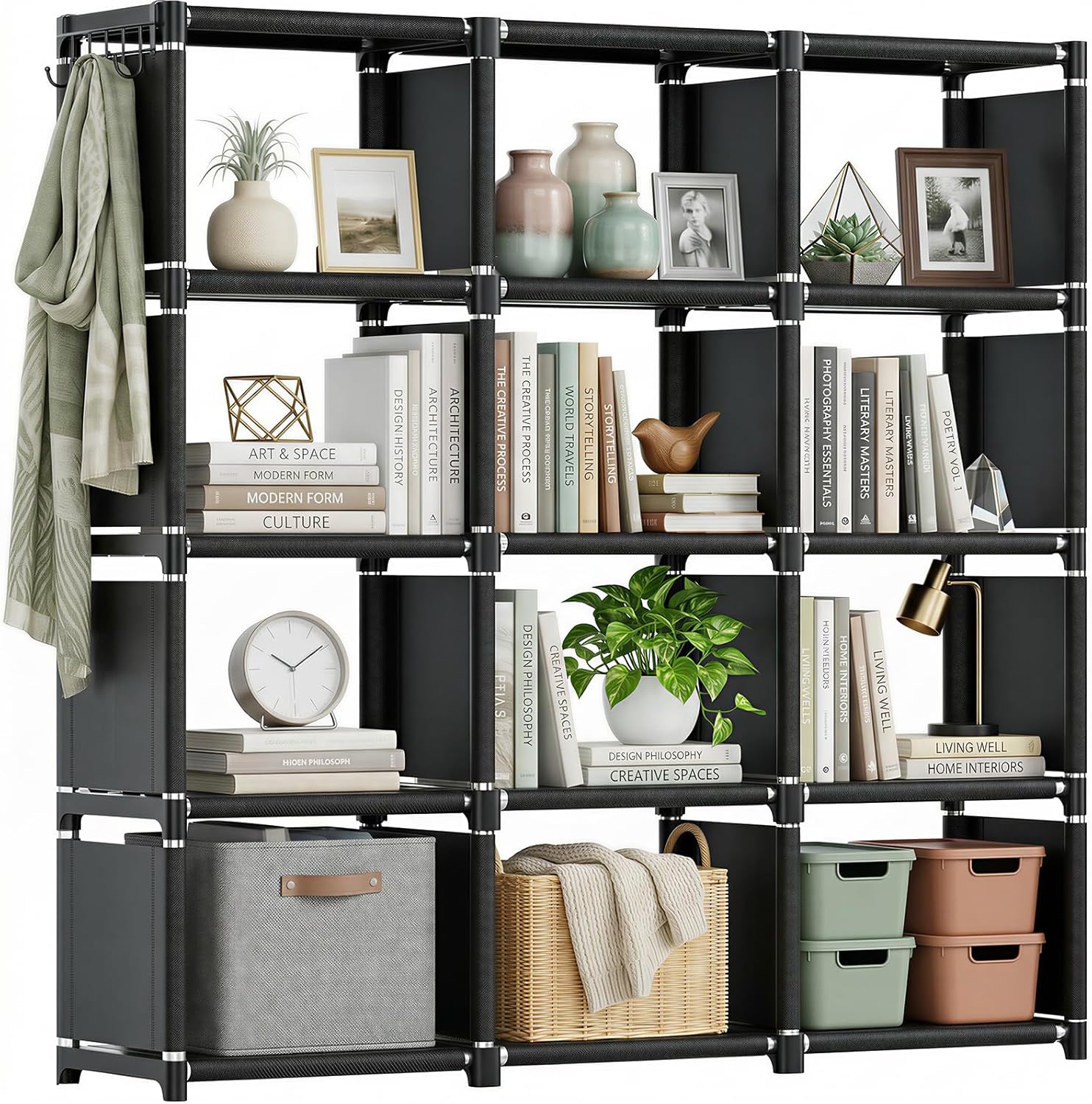
12-Cube Storage Bookshelf (Metal)
View product →
Bamboo Expandable Drawer Organizer
View product →