How to Store Cleaning Supplies Safely When You Have Kids or Pets
Last updated: 2026-08-21 · 5 min read
Cleaning supplies are one of those categories that sneak up on you. One day you have a tidy cabinet under the sink, and the next you have nine half-empty spray bottles, a jug of bleach, and a mystery product you don't remember buying. When you add curious kids or a dog who treats cabinet doors as a personal challenge, the stakes go from 'mildly annoying' to 'genuinely dangerous' fast. The good news is that storing cleaning supplies safely doesn't mean locking everything in a bunker or giving up your system. It means being deliberate: the right containers, the right locations, and a couple of smart barriers between your supplies and the small creatures who share your home.
Start With a Full Audit of What You Actually Have
Before you reorganize anything, pull everything out and look at it honestly. Check expiration dates, consolidate duplicates, and get rid of products you haven't touched in a year. Fewer bottles means less to secure, less to label, and less risk overall.
Group what's left into categories: daily-use products (dish soap, countertop spray), occasional-use products (oven cleaner, grout scrubber), and rarely-used or highly concentrated products (drain opener, bleach). Where you store each group will depend on how hazardous it is and how often you reach for it.
Move the Most Dangerous Supplies Completely Out of Reach
This is the non-negotiable first step. Concentrated products like bleach, ammonia-based cleaners, drain openers, and anything labeled 'corrosive' or 'caustic' should never live under a sink or in a low cabinet if you have children or pets.
Relocate these to a high shelf in a utility closet, laundry room, or garage. If you don't have a high shelf option, a locked storage box kept out of the main living area is your next best move. The Large Bamboo Storage Box with Lock Large Bamboo Storage Box with Lock is a solid option here. It looks intentional rather than industrial, which matters when the box is sitting on a shelf in a visible space.
Secure the Under-Sink Cabinet Properly
Under the sink is convenient, and that convenience is exactly why it's the first place a toddler or a persistent dog will investigate. If your everyday cleaners live there, you need two things: a childproof latch and an actual organizational system so things don't tip over or leak.
For the latch, use a traditional cabinet lock rated for toddlers. They cost almost nothing and take five minutes to install. For the organization, a slide-out organizer makes a real difference. A two-tier setup means you can store taller bottles in the back and shorter ones in front without digging. The 2-Tier Under-Sink Slide-Out Organizer 2-Tier Under-Sink Slide-Out Organizer fits most standard cabinet widths and keeps everything upright and separated so spray bottles aren't knocking into each other.
Use Height to Your Advantage in Other Rooms
Not every room has a closet with a high shelf. In bathrooms, laundry rooms, and even kitchens, wall-mounted shelving can move your supplies above the reach zone (generally above 5 feet for curious kids, higher for climbers) while keeping them accessible to you.
Wall shelves work especially well for products you use regularly but don't want on a countertop. Acrylic Floating Wall Shelves Acrylic Floating Wall Shelves (4-Pack) are a clean option if you want things visible and easy to grab. If your space leans more toward a utility or farmhouse feel, the Rustic Wood Floating Shelves Rustic Wood Floating Shelves (Set of 3) give you the same height advantage with a warmer look. My fiance has strong feelings about utility areas not looking like a janitorial supply room, so this was actually a compromise we both landed on happily.
Think About Pets Specifically, Not Just Kids
Kids and pets are both a concern, but they create slightly different problems. A toddler might open a cabinet; a dog might chew through a plastic bottle left on the floor. Cats will knock things off surfaces. Pets can be poisoned by products that seem mild to us, including many citrus-based cleaners, pine oil cleaners, and anything containing phenols.
For pets specifically, focus on two things. First, never leave a spray bottle or open container on the floor, even briefly. Second, make sure any storage solution you use can actually contain the product if a bottle leaks or tips. A slide-out organizer with raised edges helps with spills. Keep the laundry room door closed or use a door latch if that's where your concentrated products live.
Create a 'Daily Use' Zone That's Safe but Accessible
Not every cleaning product is a serious hazard. Dish soap, hand soap, and a basic all-purpose spray are things you reach for ten times a day. It's unrealistic to lock those up.
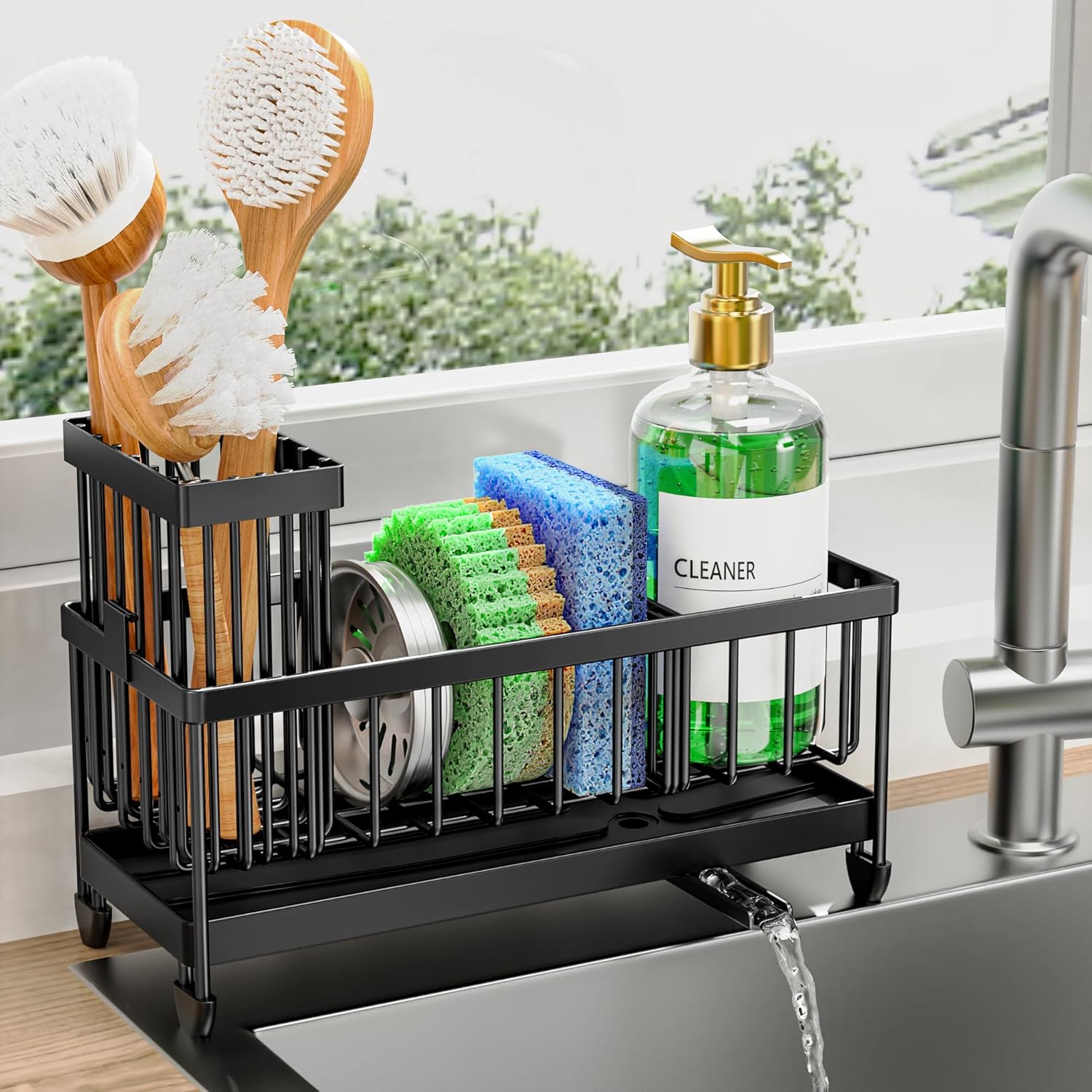
For daily-use supplies, a countertop or sink caddy keeps things tidy and upright without requiring a dedicated cabinet. The Stainless Steel Sink Caddy Organizer Stainless Steel Sink Caddy Organizer holds your dish soap, a scrubber, and a sponge without taking up more counter space than necessary. Place it on the back edge of the sink, away from the counter's edge, and it's genuinely out of reach for small children who can't lean over the counter yet. For anything stored lower, just make sure caps are tight after every use.
Label Everything, Including Lids
If you're moving supplies into new locations or decanting anything into a different container, labeling is not optional. In an emergency, someone helping in your home needs to know immediately what they're looking at.
Label both the bottle and the lid. Use a label maker if you have one (yes, I have one; no, I will not apologize) or waterproof label tape and a permanent marker. Include the product name and any key hazard warnings. If you've decanted a product into a generic spray bottle, write the product name and the dilution ratio on the label. 'Mystery liquid' is not a system.
The takeaway: Storing cleaning supplies safely comes down to three moves: get the most dangerous products up high or locked away, secure the cabinets where everyday supplies live, and make sure every single container is clearly labeled. You don't have to sacrifice convenience or a good-looking space to do it. A little structure upfront means you stop thinking about it entirely, which is exactly the point.