Spice Organization: Drawer, Rack, or Cabinet?
Last updated: 2026-09-09 · 6 min read
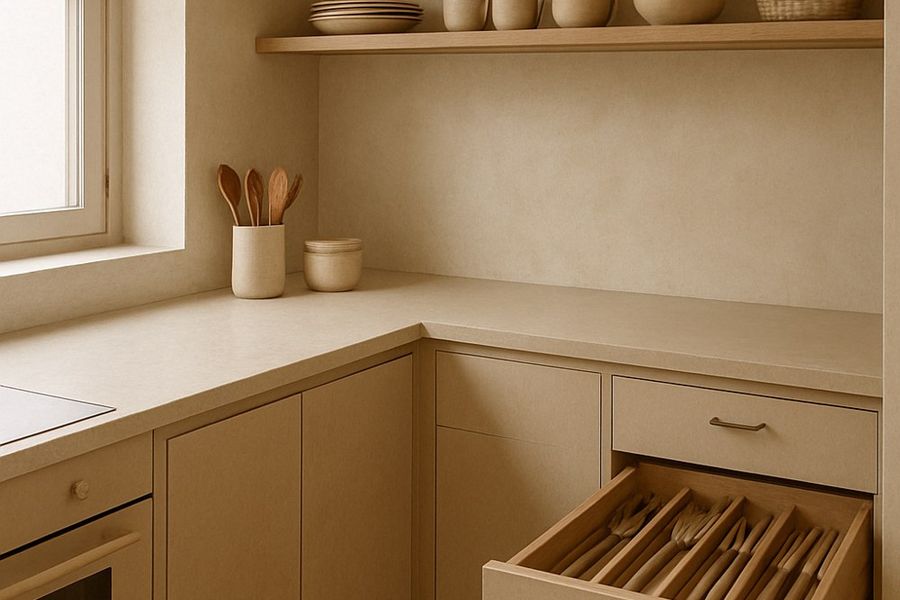
Every kitchen has a spice situation. Maybe yours is a jumbled cabinet shelf where you have to move six jars to find the cumin. Maybe it's a magnetic rack that seemed brilliant until the fridge got crowded. Or maybe the spices just live in a chaotic pile on the counter and you've accepted this as your fate. You don't have to accept it. The good news is there's no single right answer here, which I know sounds like a cop-out but genuinely isn't. The best spice storage depends on how many spices you have, how your kitchen is laid out, and how you actually cook. This guide walks through all three main approaches so you can make a real decision, not just buy the first rack you see on sale.
Step One: Count Your Spices (Seriously, Count Them)
Before you commit to any system, you need an honest number. Pull everything out, toss what's expired, and count what's left. Most home cooks land somewhere between 20 and 40 spices. Heavy bakers or people who cook across multiple cuisines often hit 50 or more.
Why this matters: a drawer system works beautifully up to about 40 jars. A wall rack typically holds 12 to 24. A cabinet shelf with a tiered riser can handle 30 to 50 depending on jar size. Picking a system that doesn't fit your actual collection is how you end up right back where you started in six months.
The Drawer Method: Best for Serious Cooks
If you have a spare drawer that's at least 18 inches wide and 3 inches deep, a spice drawer is genuinely the most functional setup for frequent cooking. You see every label face-up at a glance, nothing gets buried, and grabbing a jar mid-cook takes one second.
To make it work, you need uniform jar sizes. Mismatched containers are where this system falls apart. Decant everything into matching jars so the labels all sit at the same height. Airtight Food Storage Containers (24-Pack) gives you enough airtight containers to standardize a full collection, which also keeps spices fresh longer.
Once the jars are in, use a drawer insert to hold them in rows and stop them sliding. Bamboo Kitchen Drawer Dividers (4-Pack) fits most standard drawer sizes and can be cut to length. Label the lids with your label maker (yes, the lids, so you can read them from above) and you have a system that takes maybe three seconds to navigate.
The Rack Method: Best for Small Kitchens or Light Collections
Wall-mounted and fridge-mounted racks work best when you have limited drawer and cabinet space and a smaller spice collection, roughly 12 to 24 jars. The appeal is real: spices are off the counter, visible, and easy to grab.
A magnetic fridge rack is a solid option if your fridge has a magnetic surface and sits near your cooking zone. Magnetic Spice Rack for Fridge (4-Pack) mounts directly to the fridge door and keeps frequently used spices within arm's reach without taking up any shelf or drawer space.
One honest limitation: rack systems can make spices harder to read unless the jars face forward perfectly. My fiance, who has very strong feelings about how the kitchen looks, actually prefers the rack aesthetic over the drawer. I prefer the drawer for function. We compromised: everyday spices on the fridge rack, the full collection in a drawer. It works surprisingly well.
The Cabinet Method: Best for Large Collections
A cabinet shelf is the default for most kitchens, but untreated it's also the worst version of spice storage. Jars stack behind each other, you can't see what you have, and the back row becomes a graveyard for things you forgot you owned.
The fix is a tiered riser shelf. A two-step riser inside a standard 12-inch deep cabinet lets you see two full rows of jars at once. For deeper cabinets (15 to 18 inches), a three-step riser handles three rows. Look for a riser that's at least 18 inches wide to make good use of the shelf space.
If your cabinet has a door, use it. Over-the-Door Hanging Organizer (5-Shelf) is an over-the-door organizer that adds hanging shelf space on the inside of cabinet doors. A smaller version of this, or even a slim pocket organizer, is perfect for spice packets, bay leaves, or anything that doesn't fit in a jar.
Standardizing Your Jars (And Why It's Worth It)
Whatever system you choose, the single biggest upgrade you can make is using consistent jars. This is the step most people skip and then wonder why their setup still feels messy.
For drawers and cabinets, small square jars (roughly 4 oz) pack more efficiently than round ones and don't roll around. For racks, round jars with flat backs sit flush against the wall. If you're going for a more intentional look on open shelving, Glass Storage Jar with Wooden Lid or Tall Glass Storage Jar with Wooden Lid give you a clean, unified appearance that makes the shelf feel like a deliberate choice rather than an accident.
Decanting does take an afternoon. Do it once, label everything clearly, and you won't have to think about it again for years.
Labeling: The Step That Makes the System Actually Work
A well-organized spice setup with unclear labels is still annoying to use. Label both the lid (if you're using a drawer) and the front of the jar (for racks and cabinets). Use the same font size and capitalization across every jar so nothing looks out of place.
If you're using pre-printed labels, print them all at once from the same template so they match. If you're using a label maker, set it to the same font and size for the entire batch. I know this sounds fussy. It is fussy. It's also the reason I can grab ground coriander in the dark without looking twice.
Maintaining the System Over Time
Spice organization has a way of slowly falling apart if you don't have a rule for putting things back. The simplest rule: every jar goes back to its designated spot, alphabetically or by cuisine category, whichever grouping reflects how you cook.
Do a quick audit once a year. Pull everything out, check expiration dates, and toss what's past its prime. Most ground spices are at their best within one to two years of opening. Whole spices last longer. If you can't smell a spice when you open the jar, it's done.
Keeping the collection at a manageable size is honestly what keeps the system from collapsing. When you hit your storage limit, that's a sign to use something up before buying more, not to add another shelf.
The takeaway: Drawers win on function if you cook often and have the space. Racks are smart for small kitchens or smaller collections. Cabinets work for large collections once you add a tiered riser and use the door. Whichever you choose, uniform jars and clear labels are the two moves that make any system actually usable. Pick the setup that fits your kitchen, do the decanting work once, and it holds.
Everything mentioned in this guide

Airtight Food Storage Containers (24-Pack)
View product →
Bamboo Kitchen Drawer Dividers (4-Pack)
View product →
Magnetic Spice Rack for Fridge (4-Pack)
View product →
Over-the-Door Hanging Organizer (5-Shelf)
View product →
Glass Storage Jar with Wooden Lid
