Reach-In Closet Organizer Ideas That Use Every Inch
Last updated: 2026-08-30 · 5 min read
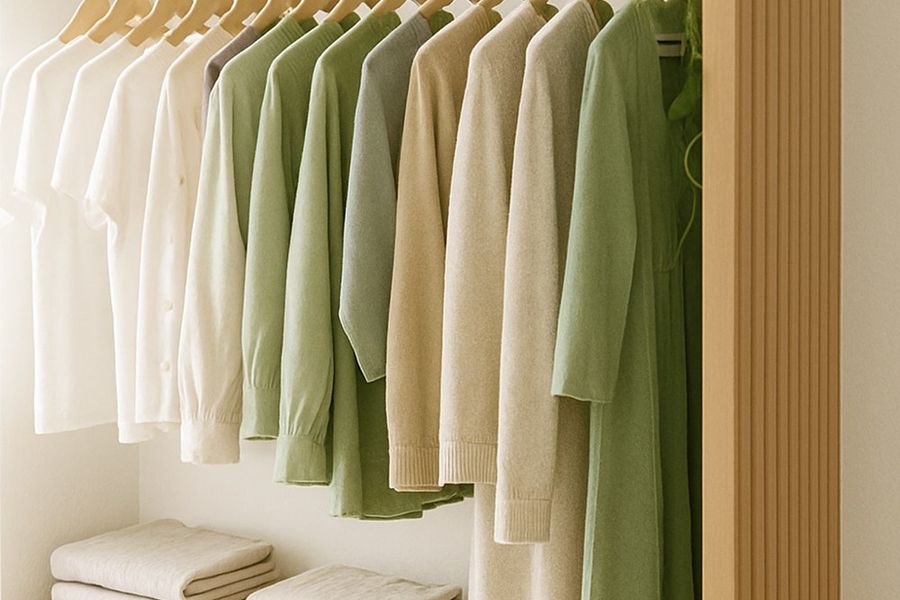
Reach-in closets are the great equalizer of home organization. Everyone has one, almost nobody is happy with it, and the default setup — one hanging rod, one shelf above it, a pile of shoes on the floor — wastes a shocking amount of usable space. The good news is that a reach-in closet is actually easier to overhaul than a walk-in. The footprint is fixed, which means every decision is concrete. You are not staring into an abyss. You are solving a small, very solvable puzzle.
Start With an Audit, Not a Shopping Trip
Before you buy a single bin, pull everything out of the closet. Every single thing. Then measure: floor to ceiling height, rod height, total width, and the depth of the shelf above the rod (standard is around 12 to 16 inches, but yours may vary).
Once you have those numbers, sort your items into categories: long hang (dresses, coats), short hang (shirts, jackets, folded pants), folded items, shoes, and accessories. This step tells you exactly what kind of storage you need before you commit to any system. Most people discover they have far more short-hang clothing than long-hang, which is the single most useful thing to know before reconfiguring a reach-in.
Double Your Hanging Space With a Two-Rod Setup
If your closet has only one rod running the full width, you are leaving the bottom half of the closet almost entirely unused. Converting to a double-rod setup on one side — or across the full width if you have no long-hang items — can effectively double your hanging capacity.
For shirts and folded pants, you need about 40 inches of vertical clearance per rod zone. Set the upper rod at roughly 80 to 82 inches from the floor and the lower rod at 40 to 42 inches. This gives you two full zones of short-hang space stacked vertically. Swap out bulky plastic hangers for slim velvet ones — they take up about half the horizontal space and keep clothes from sliding. Slim Velvet Non-Slip Clothes Hangers
If you have some long-hang items (one or two dresses, a winter coat), keep one section of the full-height rod intact on one side and double up the rest.
Rethink the Single Shelf Above the Rod
The shelf above the rod is usually underused because people stack things in a single chaotic layer and then stop reaching up there. The fix is simple: add a second shelf.
If your closet has a standard shelf at around 68 to 72 inches and your ceiling is 96 inches, you have room for another shelf about 12 to 14 inches above it. Use that upper shelf for seasonal items — extra blankets, rarely used bags, off-season clothing compressed into vacuum bags so they take up minimal space. Vacuum Storage Bags with Hand Pump (20-Pack)
For the primary shelf, use clear stackable bins or labeled baskets so you can actually find what is up there without pulling everything down.
Build Out a Real System on the Floor
The closet floor is prime real estate that most people fill with a loose pile of shoes and a laundry basket. A little structure here makes the whole closet feel twice as functional.
Clear stackable shoe boxes let you see exactly what you have, stack cleanly, and protect shoes from dust. Stackable Clear Shoe Storage Boxes (12-Pack) Line them along the back wall. For a reach-in that is three to four feet wide, you can typically fit two rows of stacked boxes and still have floor clearance under a double rod.
If you have folded items like jeans, sweaters, or workout clothes that do not hang well, a wheeled stackable bin unit fits neatly in the corner or under the short-hang zone and lets you roll it out when you need access.
Use the Door — Seriously
The back of a reach-in closet door is one of the most overlooked storage surfaces in a home. A multi-shelf over-the-door organizer can hold shoes, accessories, folded items, or anything else you want visible and accessible without taking up floor or shelf space. Over-the-Door Hanging Organizer (5-Shelf)
For smaller items — jewelry, belts, sunglasses — adhesive hooks along the inside of the door frame work well and leave no permanent marks. Just check the weight rating before loading them up.
My fiance initially had reservations about the over-the-door route (aesthetic concerns, which I respect), but once it was full and functional, the conversation moved on quickly.
Add a Modular System If You Are Starting From Scratch
If your closet currently has the builder-grade single rod and shelf setup and you want a real overhaul, a modular closet system is worth the investment. These systems let you configure towers, rods, shelves, and drawers to match your exact inventory of clothes and accessories.
A system with built-in wooden drawers is especially useful in a reach-in because drawers replace the need for a separate dresser in the room. Aheaplus Closet System with 4 Wooden Drawers Measure your closet width carefully before ordering — most modular systems are designed in standard increments, and a difference of a few inches matters.
If you want flexibility without permanent installation, a freestanding modular system can be reconfigured as your needs change. VIPEK V5 Freestanding Modular Closet System
Label Everything and Call It Done
Once your zones are set — hanging, folded, shoes, seasonal, accessories — label them. Not because you will forget, but because it keeps the system intact over time. When everything has a designated place, putting things back becomes automatic instead of effortful.
For bins and baskets, a simple label on the front face is enough. For shelf zones, a small label on the shelf edge works well. Yes, I label the shelf edges. No, I am not going to explain myself further.
The goal is a closet where you can find anything in under ten seconds and put anything away in under ten seconds. That is the whole benchmark. If you can hit that, the system is working.
The takeaway: A reach-in closet can hold a lot more than you think — the trick is treating every surface as usable space. Double up your rods, stack your shoe storage, add a shelf above the existing one, and put the door to work. Start with what you have, measure before you buy, and add structure in layers. The result is a closet that actually functions like a system instead of a place where things disappear.
Everything mentioned in this guide

Slim Velvet Non-Slip Clothes Hangers

Stackable Clear Shoe Storage Boxes (12-Pack)
View product →
Over-the-Door Hanging Organizer (5-Shelf)
View product →
Aheaplus Closet System with 4 Wooden Drawers

VIPEK V5 Freestanding Modular Closet System
