How to Organize Under the Bathroom Sink (For Real This Time)
Last updated: 2026-07-13 · 4 min read

Under the bathroom sink is one of those spaces where good intentions go to die. You shove something under there in a hurry, close the cabinet door fast, and then spend the next six months pretending the whole situation is fine. It is not fine. But it is fixable, and it does not require a weekend or a complete personality overhaul. Here is exactly how to do it.
Start by Pulling Everything Out
Before you buy a single bin, take everything out and put it on the floor or counter. All of it. The half-empty bottles, the mystery hair tool, the three different moisturizers you rotate through with zero system. Seeing it all at once is the only way to understand what you are actually working with.
While the cabinet is empty, wipe it down. Check for any moisture or soft spots around the pipes. If you notice any, address that before you put anything back. A clean, dry cabinet is the foundation here.
Sort Into Categories Before You Do Anything Else
Group everything by type: skincare, hair tools, first aid, cleaning supplies, extra stock (backups you bought in bulk), and things that honestly belong somewhere else entirely. That last pile is usually bigger than expected.
Toss expired products. If you cannot remember buying it and there is no date on it, let it go. Throw out duplicates you will never realistically use. The goal is to only put back what you actually need and use.
Measure the Cabinet Before You Shop
This step saves you from the very specific frustration of buying an organizer that does not fit around your pipes. Measure the interior width, depth, and height on both sides of the pipe column. Also note how far off the floor the pipes sit, since that determines whether a two-tier shelf will clear them.
A typical under-sink cabinet is about 24 to 36 inches wide and 18 to 20 inches deep, but yours may be different. Write down your numbers before you look at anything.
Use Vertical Space With the Right Organizer
Most under-sink cabinets are deeper than people use effectively. A slide-out shelf lets you access things at the back without dismantling the front row every single time. The 2-Tier Under-Sink Slide-Out Organizer is a two-tier slide-out organizer that works well on the larger side of the cabinet, away from the drain pipe. You get two levels of storage and you can actually reach what is on them.
For smaller categories like cotton rounds, hair ties, or travel-size products, the 2-Tier Under-Sink Bathroom Organizers (4-Pack) set gives you compact individual organizers you can position wherever the cabinet geometry allows. Four per pack means you can dedicate one to each category without crowding.
Assign a Zone to Every Category
Once you have your organizers in place, give each zone a specific purpose and stick to it. Cleaning supplies stay on one side. Daily skincare goes on the slide-out shelf so it is easy to grab. Backup stock goes in the back corner where it is out of the way but still visible.
I keep a small rotating organizer for the products I reach for every single day so nothing gets buried. The 360 Rotating Makeup Organizer (2-Tier) spins 360 degrees and fits more than it looks like it should. My fiance initially raised an eyebrow at the idea of a spinning tray under a sink cabinet, and then immediately started using it every morning without comment. I consider that a win.
For hair tools or anything cord-related, consider using the inside of the cabinet door. A set of Clear Adhesive Wall Hooks (12-Pack) clear adhesive hooks can hold a blow dryer cord or a flat iron off the cabinet floor, which frees up shelf space for everything else.
Label Everything (Yes, Everything)
Labels are not just aesthetically satisfying, which they absolutely are. They are functional. When every zone has a label, you know exactly where to return something after you use it, and so does anyone else who shares the space. The system maintains itself instead of requiring you to re-sort it every few weeks.
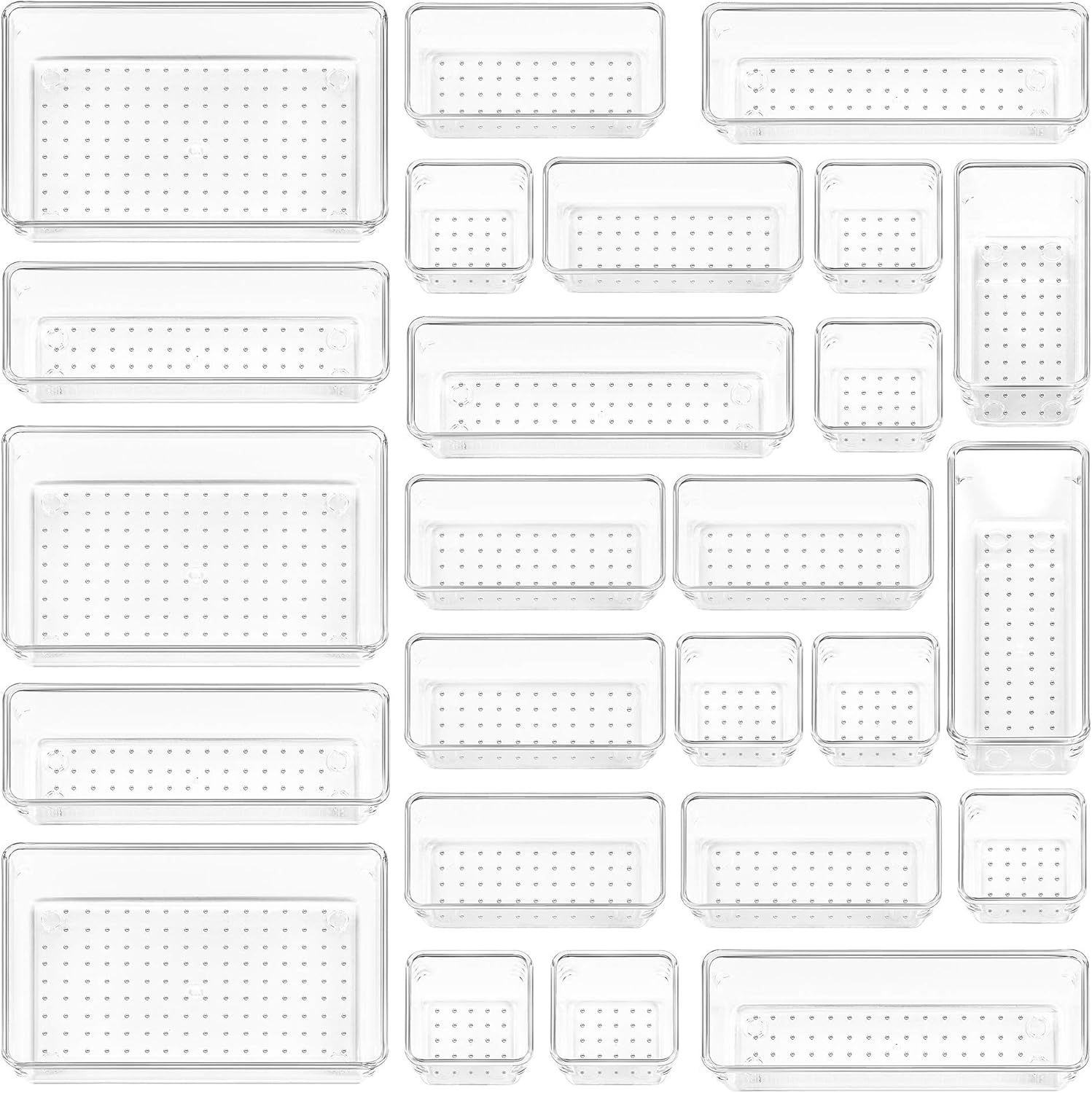
Label the bins, the shelf tiers, and the zones on the door interior if you want to go that far. You want to go that far. The clear drawer organizers in the Clear Plastic Drawer Organizers (25-Piece Set) set work well for smaller items inside bins, and they make labeling individual compartments straightforward.
Maintain It With One Simple Rule
The only thing that keeps an under-sink cabinet organized long term is a rule about backups. Decide on a maximum of one backup per product. One extra bottle of shampoo. One spare tube of toothpaste. When you open the backup, that is when you buy another one, not before. This keeps the extra stock section from quietly expanding until it is the entire cabinet again.
Do a quick reset every month. It takes about five minutes if the system is working. If it takes longer, something about the zones is not matching how you actually use the space, and it is worth adjusting rather than just pushing through.
The takeaway: Under the bathroom sink does not have to be an act of faith every time you open the cabinet. Measure first, sort before you buy, assign every item a real home, and label it. The whole project typically takes about an hour. That is a small investment for a cabinet you open twice a day.