Linen Closet Organization: Fold, Zone, and Label It Once
Last updated: 2026-08-17 · 5 min read

A linen closet should be one of the easiest spaces in your home to keep tidy. Everything goes in folded, everything comes out folded. There are no mystery items, no assembly required. And yet somehow it becomes the place where towels go to slowly lose their minds and fitted sheets disappear into a rumpled abyss. This guide walks you through exactly how to fix that: sort what you have, fold it right, build zones that make sense for your household, and label it so whoever opens that door next (yes, including the person you live with who swears they put things back correctly) knows exactly where everything goes.
Start With a Full Clearout
Pull everything out. All of it. Stack it on your bed or the hallway floor and look at what you actually own.
Separate into four piles: keep, donate, repurpose (old towels make excellent cleaning rags), and trash. A good rule of thumb: if you have more than two complete sets of sheets per bed in your home, you have too many. For towels, two per person plus two guest towels is a reasonable ceiling. Anything beyond that is just clutter with better PR.
Wipe down the shelves before anything goes back in. This takes five minutes and it makes the whole project feel more intentional.
Measure Your Shelves Before You Buy Anything
Grab a tape measure before you touch a single storage product. Write down the height between each shelf, the depth, and the total width. Most standard linen closets have shelves around 12 to 16 inches deep and 30 to 36 inches wide, but yours might be different.
These numbers will determine which bins, baskets, and organizers actually fit. Buying first and measuring second is how you end up with a basket that sticks out two inches past the shelf edge and tips forward every time someone grabs a hand towel. I speak from experience.
Fold Everything the Same Way
Consistent folding is what makes a linen closet look organized rather than just less messy. For towels, fold in thirds lengthwise, then fold in half twice. Store them with the folded edge facing out so the shelf looks clean and you can grab one without disturbing the stack.
For flat sheets, a simple trifold works fine. For fitted sheets, the burrito method (tuck the corners into each other, roll tightly) keeps them from unraveling. Store each full sheet set together: tuck the flat sheet and pillowcases inside the folded fitted sheet so everything comes out as one unit. No more hunting for the matching pillowcase at 10pm.
Extra blankets and bulky comforters are a different problem. If you have more than will fit neatly on a shelf, consider vacuum compression bags to reduce the stack. Vacuum Storage Bags with Hand Pump (20-Pack) are a reliable option and the hand pump means you do not need to track down a vacuum with the right attachment.
Build Zones That Match How You Actually Use the Closet
Zone your closet by household and frequency. The things you reach for most often go at eye level. The things you need occasionally go above or below.
A simple zone layout for a standard linen closet might look like this: eye-level shelf for everyday towels and the current sheet sets for each bed; second shelf for guest linens, extra pillowcases, and backup towels; top shelf for seasonal or rarely used items like extra blankets and duvet inserts; floor or bottom shelf for overflow items, a spare laundry basket, or first aid supplies if you keep those here.
If your closet has a door with usable space, an over-the-door organizer can add meaningful storage for smaller items without touching your shelf real estate. Over-the-Door Hanging Organizer (5-Shelf) works well here for things like travel-size toiletries, cleaning cloths, or backup toiletry items you want accessible but off the shelves.
Use Bins and Baskets to Group Like Items
Open shelves look tidy when items are contained in consistent bins rather than sitting loose. Matching baskets or bins also let you pull out a whole category at once instead of rummaging.
For smaller miscellaneous items like washcloths, travel toiletries, or cleaning supplies, stackable bins keep things upright and visible. Stackable Foldable Storage Baskets (5-Pack) are a solid choice because they fold flat when not in use, which is handy if your needs change seasonally.
Keep like with like. Washcloths go with washcloths. Hand towels go with hand towels. The moment you start mixing categories inside a bin, the system starts to slip.
Label Everything, and Mean It
Here is the part where I will not apologize: label your shelves and your bins. Every single one.
Labels do two things. First, they remove the decision about where something goes when you are putting laundry away and your brain is running at 40 percent. Second, they communicate the system to everyone else in the household. My fiance and I have very different theories on what counts as putting something away correctly, and labels have done more for our household harmony than almost any other organizational tool. That is not a joke.
Label the shelf itself or the front of the bin. Use consistent formatting so it looks intentional rather than stuck-on-in-a-hurry. A label maker is ideal, but printed labels in a clear holder work just as well.
Set a Reset Routine
A well-organized linen closet does not stay that way on its own. What keeps it working is a light reset every time you do laundry.
When towels come out of the dryer, fold them immediately and put them in the right zone. Do not set them on top of the closet door to deal with later. That pile is where systems go to die.
Once every season, do a five-minute check: pull anything that has drifted to the wrong zone, refold anything that has gotten sloppy, and check whether your bin sizes still make sense for what you own. The whole thing should take less time than a single load in the dryer.
The takeaway: A linen closet that works comes down to three things: folding consistently, assigning everything a specific zone, and labeling so the system runs on autopilot. Do it once, do it right, and you will spend approximately zero mental energy on it for the rest of the year. That is the whole point.
Everything mentioned in this guide
Vacuum Storage Bags with Hand Pump (20-Pack)
View product →
Over-the-Door Hanging Organizer (5-Shelf)
View product →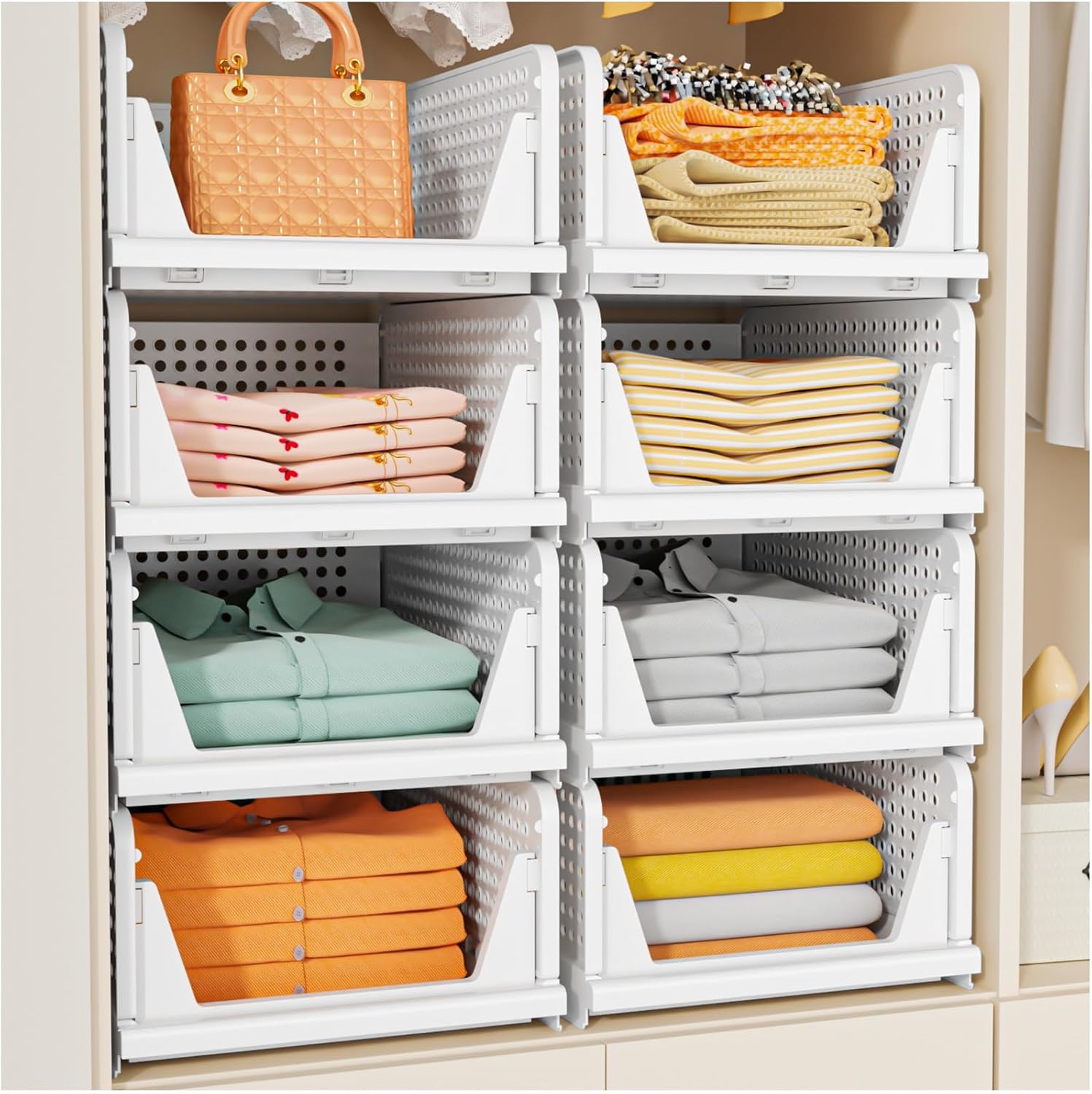
Stackable Foldable Storage Baskets (5-Pack)
View product →
Collapsible Fabric Storage Cubes (6-Pack)
View product →
Vacuum Seal Space Saver Bags (20-Pack)
View product →