Kitchen Cabinet Organization: Make Every Shelf Count
Last updated: 2026-07-30 · 4 min read
Kitchen cabinets are some of the hardest-working storage in your home, and also some of the easiest to let slide into chaos. A jumble of mismatched lids, half-empty spice jars, and that one pan you have to unstack six things to reach. Sound familiar? The good news is that getting your cabinets under control is less about buying a bunch of stuff and more about being honest with what you have, then giving everything a deliberate home. Here is how to do it shelf by shelf.
Start With a Full Empty-Out
Before you buy a single bin or shelf riser, take everything out of every cabinet. Yes, everything. Set it on the counter, the table, the floor if you have to. This is the only way to see what you actually own versus what you vaguely remember owning.
As you pull things out, sort into three piles: keep, donate, and toss. Be ruthless about duplicates. You do not need four wooden spoons. Once your keep pile is settled, group items by how you use them: baking together, everyday dishes together, pots and pans together. You will organize around these categories, not around cabinet location.
Assign Zones Before You Put Anything Back
The biggest mistake people make is putting things back where they used to live out of habit. Instead, think about zones based on where you actually use things. Everyday plates and glasses belong near the dishwasher or the table. Pots belong near the stove. Baking supplies can live in a lower, deeper cabinet since you reach for them less often.
Write your zones down before you start loading shelves back up. This takes ten minutes and saves you from reorganizing again in two weeks.
Fix the Vertical Space Problem
Standard cabinet shelves are usually spaced for the tallest thing you own, which means a lot of wasted air above your shorter items. Shelf risers are the simplest fix here. A simple riser inside a cabinet can effectively double your usable shelf space for things like plates, bowls, and mugs.
For spices and small jars, a two-tier shelf riser lets you see everything at once instead of digging behind the front row. I will be upfront: the moment I added risers to our spice cabinet and could actually see every single jar label, I felt a disproportionate amount of satisfaction. I do not make the rules.
Tame the Food Storage Container Situation
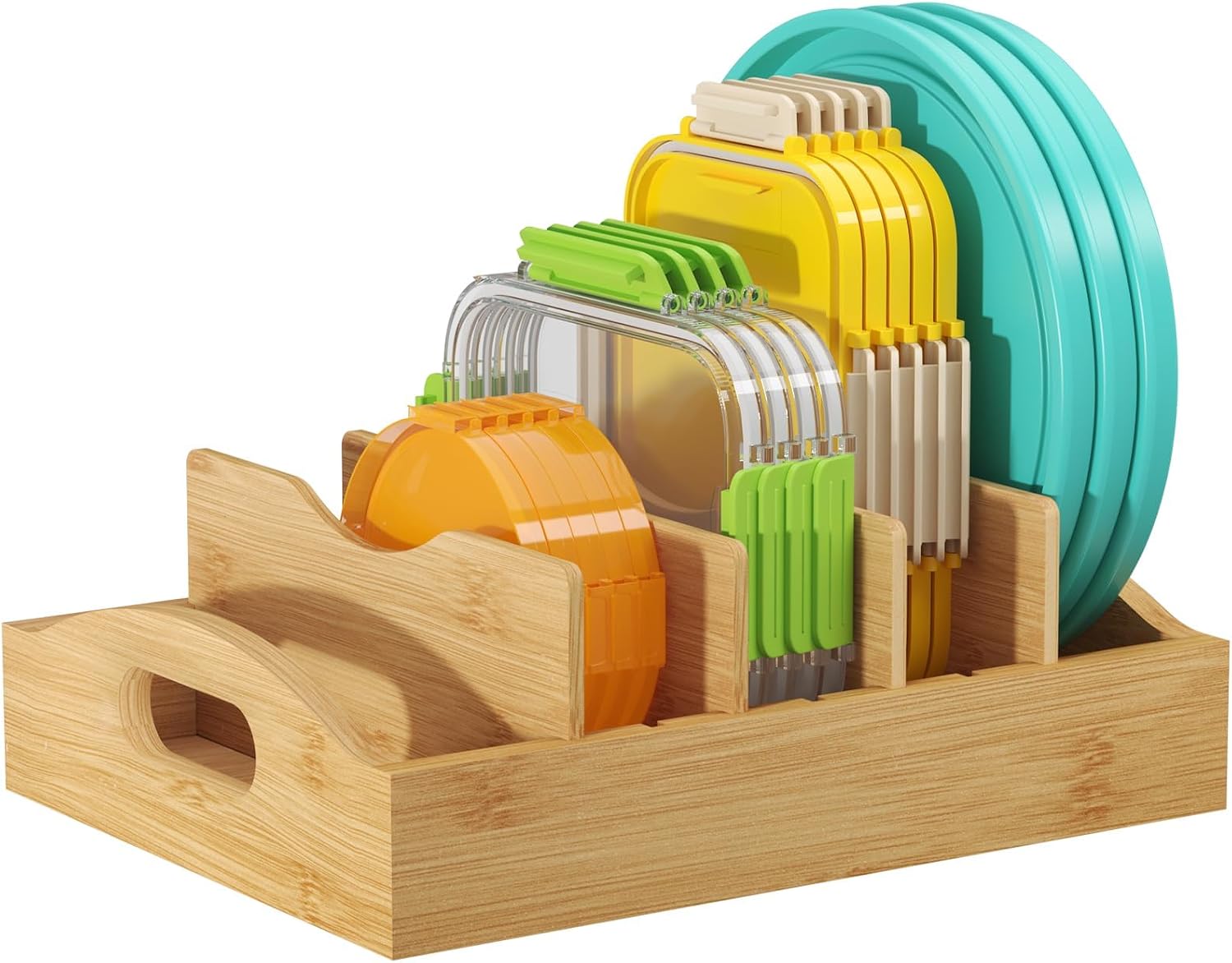
Lids are the chaos engine of every kitchen cabinet. The most effective fix is to store lids separately from containers, either in a vertical file-style holder or in a dedicated bin. Bamboo Food Container Lid Organizer is built exactly for this and keeps lids sorted upright so you can grab the right one without triggering an avalanche.
For dry goods and pantry staples, switching to uniform containers makes a bigger difference than you might expect. When everything is the same height and shape, stacking is cleaner, labels are easier to read, and your shelves stop looking like a grocery store back room. Airtight Food Storage Containers (24-Pack) gives you a full set of airtight containers in graduated sizes, which covers most pantry needs.
Sort Out the Drawer Situation While You Are At It
If your cabinets have drawers, those deserve the same treatment. A drawer without dividers is just a flat pile with a front. Bamboo dividers work well in kitchen drawers because they hold up to moisture and do not slide around the way plastic can.
Bamboo Kitchen Drawer Dividers (4-Pack) fits most standard drawer depths and can be rearranged as your needs change. For larger drawers, Bamboo Expandable Drawer Organizer expands to fit the space, which is handy if your drawers are not all the same size. Utensils, tools, and odds and ends each get their own lane. My fiance was skeptical about the dividers until the drawer actually closed properly for the first time in two years.
Use the Cabinet Doors
The inside face of a cabinet door is genuinely useful storage that most people ignore. A slim over-the-door or adhesive-mount organizer on the inside of a pantry door can hold spice packets, foil and wrap boxes, or a small caddy for oils and vinegars.
For straw storage or small wraps inside a narrower door, Acrylic Straw Holder for Cabinet Door mounts directly to the cabinet door without drilling and keeps things vertical and visible. Clear adhesive hooks also work well for hanging small tools, measuring cups, or pot lids on the inside of a lower cabinet door.
Label Everything and Maintain It
Once zones are set and containers are filled, label them. This is not optional if you live with another person. Labels are what keep systems running after the initial motivation wears off, because they tell everyone in the household where things belong, not just you.
A basic label maker works for bins, containers, and shelf edges. For a cleaner look on glass or acrylic containers, printed labels or chalkboard labels read more clearly. The goal is that putting something away should be as easy as taking it out. If it is easier to just set something on the counter, your system needs adjusting, not your habits.
The takeaway: Getting your kitchen cabinets organized is really just three moves: edit what you own, assign everything a deliberate zone, and then add the right tools to keep that zone stable. You do not need to overhaul everything in a weekend. Pick one cabinet, get it right, and let that build momentum. The satisfaction of opening a cabinet where everything is exactly where it should be is hard to explain until you have it. Then it is hard to live without.
Everything mentioned in this guide
Bamboo Food Container Lid Organizer
View product →
Airtight Food Storage Containers (24-Pack)
View product →
Bamboo Kitchen Drawer Dividers (4-Pack)
View product →
Bamboo Expandable Drawer Organizer
View product →
Acrylic Straw Holder for Cabinet Door
View product →