How to Organize a Junk Drawer (and Keep It That Way)
Last updated: 2026-06-22 · 4 min read

Every home has one. The drawer that starts innocently enough with a spare battery and a takeout menu, and somehow ends up holding three dead pens, a key to an unknown lock, two twist ties, and a watch with no band. I am not judging. I have been there. The difference between a junk drawer and a functional catch-all drawer is not willpower. It is a system. Give everything a category and a container, and the chaos takes care of itself. Here is exactly how to do it.
Start by Pulling Everything Out
Empty the drawer completely. Not halfway, not just the stuff on top. Everything out, onto a flat surface where you can actually see it.
Now sort into rough piles: batteries, tools, writing utensils, cords, paper, mystery items. Do not decide yet whether to keep things. Just group first. This step alone usually takes about five minutes and is genuinely clarifying. You will probably find that half the drawer is trash.
Toss More Than You Think You Should
Go through each pile and be honest. Dried-out pens go. Orphaned screws with no known home go. Menus from restaurants you have never ordered from go.
A good rule: if you have not reached for it in a year and you cannot name a specific future moment when you will, it is clutter. Junk drawers fail because we treat them as storage for things we cannot decide about. Make the decision now so you do not have to make it again at 11pm when you are digging for a flashlight.
Measure Before You Buy Anything
This is the step most people skip and then regret. Measure the interior of your drawer: length, width, and depth. Write it down.
Most standard kitchen drawers run between 18 and 24 inches long and 14 to 20 inches wide. Depth varies more, typically 3 to 5 inches. Those numbers matter because dividers that are too tall will stop the drawer from closing, and bins that are too wide will leave awkward dead zones at the sides. Bring your measurements when you shop, or pull them up on your phone.
Choose Dividers That Actually Fit
Adjustable dividers are your best friend here because no two drawers are exactly the same. The Bamboo Expandable Drawer Organizer expands to fit the drawer width and keeps sections from sliding around, which is the main reason most organizers eventually fail.
If you want a more modular setup, the Clear Plastic Drawer Organizers (25-Piece Set) gives you 25 configurable compartments so you can build out a layout that matches your actual categories, not a generic template. I keep small bins for batteries and rubber bands, a longer slot for scissors, and a narrow channel for pens. Yes, all the pens face the same direction. No, I will not be reconsidering this.
Assign a Zone to Every Category
Once your containers are in place, assign each one a permanent job. Batteries in the back-left bin, tools in the front-right, cords and chargers in the center. The specific layout matters less than the consistency. Everyone in your household needs to know where things live so they can both find things and put them back correctly.
For loose cords specifically, consider a small cable box nearby or a dedicated section in the drawer to corral them. The Woven Cable Management Box (2-Pack) is useful if cords have completely taken over and you want them contained somewhere they are not tangling with everything else.
For anything paper-based, like manuals, warranty cards, or coupons, keep a small folder or clip in the drawer rather than loose sheets. The Amazon Basics File Folders (100-Pack) works well here. Pull out one folder, label it "home docs," and anything paper goes there instead of flat in the drawer where it gets buried.
Label It (Yes, Really)
I know labeling a drawer divider sounds excessive. I do not care. Labels work because they remove the mental negotiation about where something goes. When the category is written down, you do not have to remember it or convince anyone else of it.
Small label strips on the front or side of each bin are enough. You do not need anything elaborate. A label maker or even a piece of tape with a marker does the job. My fiance thought this was overkill right up until the moment they found the batteries in under three seconds without asking me.
Build the Habit That Keeps It Working
A junk drawer reverts to chaos for one reason: things get dropped in without being sorted. Fix that by doing a one-minute reset every week or two. Open the drawer, move anything that drifted into the wrong bin back where it belongs, pull out anything that does not actually live there.
That is it. One minute. The system does not require perfection every day. It just needs a light reset often enough that nothing snowballs. If you find the same category of item keeps piling up with no home, that is a signal to add a bin, not to give up on the system.
The takeaway: A junk drawer is not a character flaw. It is just a drawer without a system. Pull everything out, sort it, measure your space, fit it with the right dividers and bins, label the zones, and do a quick reset every couple of weeks. That is the whole thing. The drawer that used to stress you out every time you opened it becomes the one you actually brag about, which, yes, is a specific kind of satisfaction I am very familiar with.
Everything mentioned in this guide
Bamboo Expandable Drawer Organizer
View product →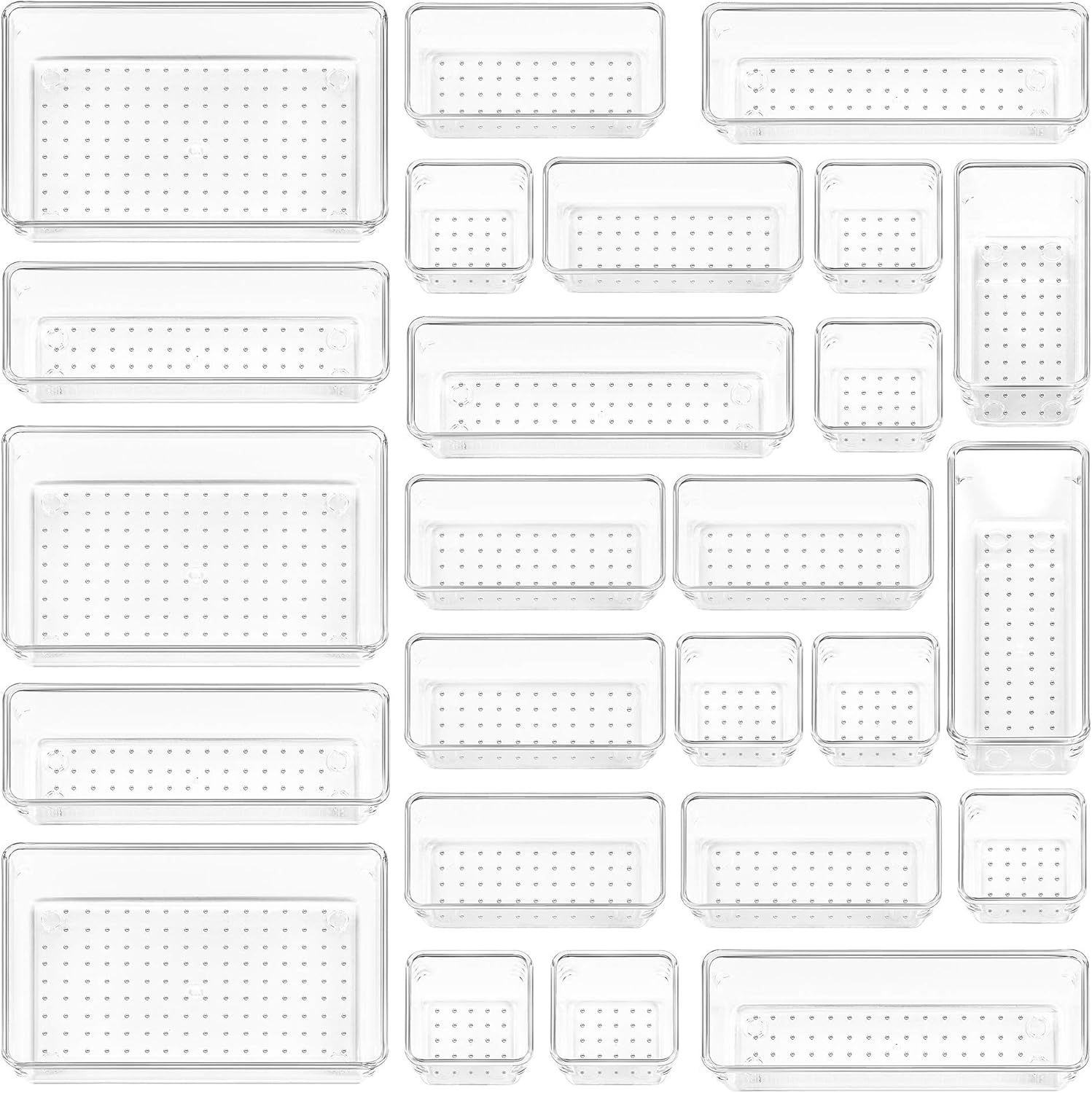
Clear Plastic Drawer Organizers (25-Piece Set)
View product →
Woven Cable Management Box (2-Pack)
View product →
Amazon Basics File Folders (100-Pack)
View product →
Bamboo Kitchen Drawer Dividers (4-Pack)
View product →