First Apartment Organization Checklist for Small Spaces
Last updated: 2026-09-08 · 5 min read
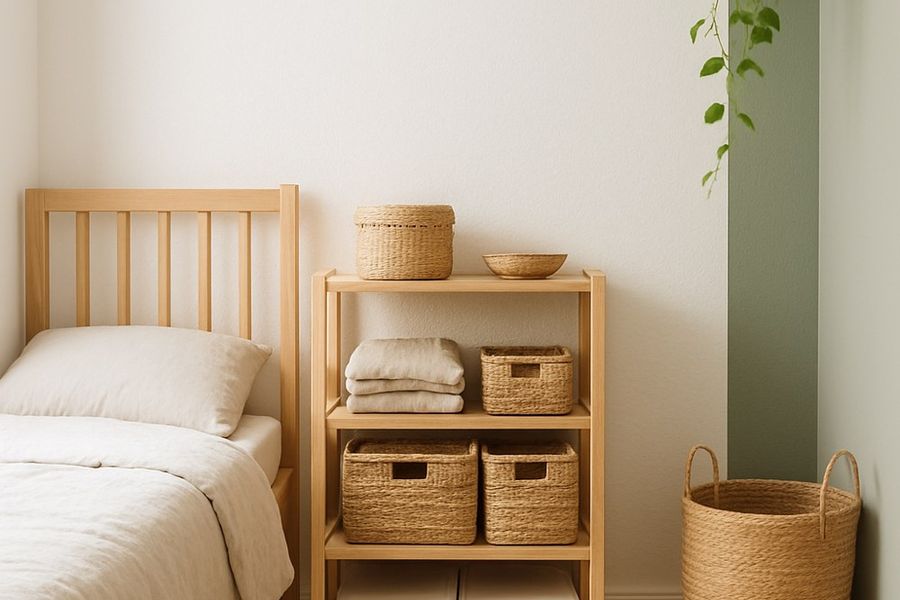
Moving into a small apartment is one of those experiences that humbles you fast. You show up with everything you own, look at 600 square feet, and suddenly understand why people own less stuff. The good news is that small spaces are genuinely easier to keep organized than large ones, once you set up the right systems from the start. This checklist walks you through every zone, room by room, so you can get it right before bad habits settle in.
Start Before You Unpack
The single best thing you can do is spend your first hour in the apartment with nothing in it. Walk every room. Open every cabinet and closet. Measure the depths of shelves, the width of the space under your sink, and the height of any awkward gaps between appliances and walls. Write it down.
This is not optional. Buying storage after you have crammed everything in is how you end up with bins that do not fit and drawers that will not close. Knowing that your under-sink cabinet is 17 inches deep before you buy an organizer will save you a return trip every single time.
Claim Your Wall Space
In a small apartment, the walls are free real estate. Most renters ignore them entirely and then wonder where everything is supposed to go.
Floating shelves above a desk, in the kitchen, or beside the bed can replace entire pieces of furniture. Acrylic Floating Wall Shelves (4-Pack) work well in tight spots where you need the visual to stay light and clean. For a warmer look in a living area, Rustic Wood Floating Shelves (Set of 3) add character without bulk.
In rental spaces where drilling feels risky, adhesive hooks carry more weight than people expect. Clear Adhesive Wall Hooks (12-Pack) are rated for several pounds each and come off cleanly. Use them on the backs of cabinet doors, inside closets, and along hallways for bags and light gear.
Organize the Kitchen for the Way You Actually Cook
Small apartment kitchens usually have three problems: not enough counter space, not enough drawer space, and cabinets that are either too deep or too tall to use efficiently.
For counters, go vertical where you can. A magnetic spice rack on the side of the fridge frees up an entire shelf. Magnetic Spice Rack for Fridge (4-Pack) holds four racks and keeps spices visible and within reach without taking up a single inch of counter.
For drawers, use dividers. Bamboo Kitchen Drawer Dividers (4-Pack) let you configure the layout to match what you actually own, which matters because a generic organizer that fits someone else's spatulas will not fit yours.
For deep or tall cabinets, stackable bins that slide out are more useful than just stacking things. The item you need is always at the bottom otherwise.
Set Up the Bathroom from Scratch
Bathroom storage in a first apartment is almost always worse than you expect. One small vanity, no linen closet, a shower with no ledge. Plan for that reality.
Under the sink is your biggest win. A two-tier slide-out organizer turns dead space into accessible storage. 2-Tier Under-Sink Slide-Out Organizer fits most standard vanity cabinets and keeps cleaning supplies, extra toiletries, and backup stock off the floor and easy to reach.
For the shower, no-drill caddies are the right call in a rental. Look for tension-rod styles that stand on the floor of the tub rather than suction options, which fail eventually.
The back of the bathroom door is often completely wasted. An over-the-door organizer with clear pockets handles hair tools, skincare overflow, medicine, and anything else that has no obvious home. Over-the-Door Hanging Organizer (5-Shelf) has five shelves and fits most standard doors.
Build a Closet System That Works for One Small Rod
Most first apartments give you a single rod and a shelf above it. That is the whole closet. The instinct is to hang everything, but hanging is the least efficient use of vertical space.
Start by switching to slim velvet hangers. Slim Velvet Non-Slip Clothes Hangers are not just an aesthetic choice. They take up about a third of the space that plastic hangers do, which on a 36-inch rod can mean fitting 20 more items.
Fold and file anything that does not need to hang: jeans, t-shirts, leggings, sweaters. Folded items stacked vertically in a drawer or bin let you see everything at once and pull one thing without disturbing anything else.
For off-season clothes and bulky items like comforters, vacuum bags are the single most effective tool in a small apartment. Vacuum Storage Bags with Hand Pump (20-Pack) compress down dramatically and slide under a bed or stack on a high shelf without taking over your living space.
Create Zones in Open Living Areas
In a studio or open-plan apartment, organization is also about visual separation. If your living area, workspace, and dining area are all one room, zones keep it from feeling chaotic.
Storage ottomans, a bookshelf used as a room divider, and consistent bin styles across a space all help. My fiance has very strong opinions about how a living area should feel, and we have landed on a rule we both like: if storage is visible, it has to look intentional. Matching bins in a consistent color, labels facing out, nothing overflowing.
For a workspace in a small space, cable management is the difference between a corner that reads as organized and one that just reads as cluttered. Woven Cable Management Box (2-Pack) hides power strips and excess cord in a way that looks deliberate rather than like something you shoved under a table.
The Paperwork and Entryway Problem
First apartments generate more paperwork than you expect. Lease, utilities, renter's insurance, medical forms. If you do not set up a system on day one, it becomes a pile, and then it becomes a problem.
A simple file folder system in a small box or drawer handles this without needing a filing cabinet. Label folders by category: Housing, Insurance, Medical, Financial, Miscellaneous. That is genuinely all you need.
For the entryway, even if yours is just the three feet inside your front door, designate a spot for keys, mail, and bags. A hook for the bag, a small tray for keys, a basket for mail to sort. If things have a home the moment you walk in, they will not migrate across the apartment.
The takeaway: A small apartment does not require less stuff as much as it requires smarter placement. Start with measurements, claim your walls, set up each zone before it gets chaotic, and choose storage that fits your actual space rather than a generic idea of one. The systems you build in week one are the ones you will still be using in year three.
Everything mentioned in this guide

2-Tier Under-Sink Slide-Out Organizer
View product →
Slim Velvet Non-Slip Clothes Hangers

Vacuum Storage Bags with Hand Pump (20-Pack)
View product →
Acrylic Floating Wall Shelves (4-Pack)
View product →
Magnetic Spice Rack for Fridge (4-Pack)
View product →