Desk Organization Ideas for People Who Work From Home
Last updated: 2026-09-12 · 5 min read
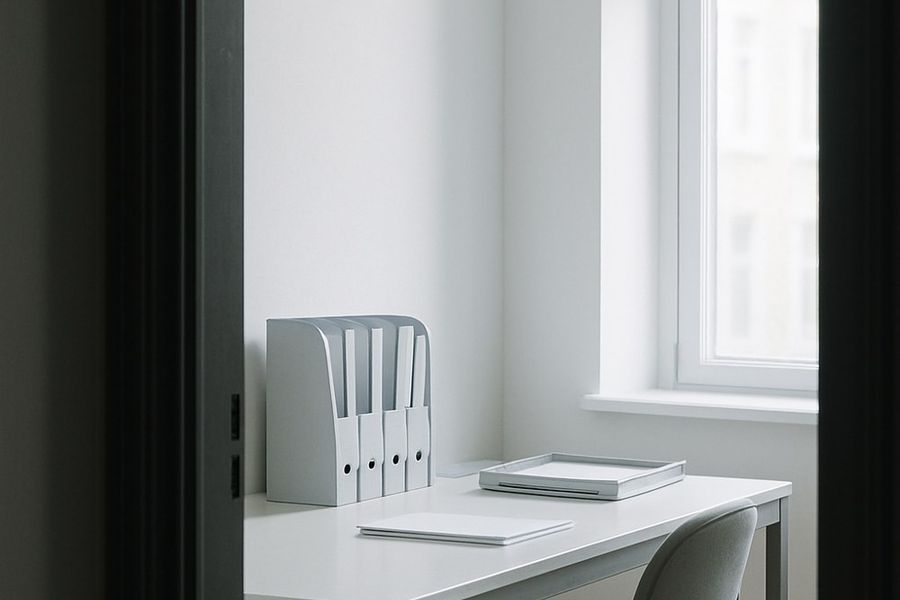
Working from home sounds like a dream until your desk becomes a graveyard of sticky notes, charging cables, and that one pen that definitely works but you can never find when you need it. A disorganized desk is not just an aesthetic problem. It creates friction every single time you sit down to work, and that friction adds up. The good news is that a well-organized desk is not about buying a matching set of everything and calling it a day. It is about building a system that fits the way you actually work. Here is how to get there.
Start with a Full Clear-Off
Before you organize anything, take everything off your desk. Yes, everything. Set it on the floor or a nearby table and give the surface a good wipe down. This is not optional.
Now look at what you actually pulled off. Group it into three piles: things that are used daily, things that are used occasionally, and things that have no business being on a desk at all. That third pile is usually the biggest one. Recycle what can be recycled, relocate what belongs somewhere else, and only bring back what genuinely earns desk space.
This step alone will solve more than half the problem.
Define Zones Before You Buy Anything
Desk organization fails when people buy containers first and think about their workflow second. Flip that order.
Decide on two or three zones based on how you work. A typical setup might be: a primary work zone directly in front of you (laptop or monitor, one notepad, one pen cup), a reference zone to one side (documents you consult regularly, a coaster, maybe a small speaker), and a supply zone to the other side or in a drawer (extras, chargers, anything you reach for a few times a week but not constantly).
Keep the primary zone as clear as possible. The more empty space in your direct line of sight, the easier it is to focus.
Tackle the Cable Problem Properly
Cables are the number-one thing that make a tidy desk look messy even when everything else is in order. The fix is not hiding them in a drawer. It is routing them intentionally.
Start by reducing the number of cables you have. A single surge protector positioned out of sight handles multiple devices from one cord. Surge Protector Outlet Extender (6 AC + 4 USB) is a solid option that gives you six AC outlets and four USB ports, so you are not stacking adapters.
For the cables that remain visible, group them with velcro ties and run them along the back edge of the desk or down a single desk leg. A cable management box corrals the power strip and the excess cord length in one spot. Woven Cable Management Box (2-Pack) blends into a workspace without looking like office-supply-store leftovers.
Use Vertical Space on and Around Your Desk
Most desks have more vertical space available than people use. Wall-mounted shelves directly above or beside the desk are one of the highest-impact moves you can make without adding footprint to the room.
Floating shelves work especially well for reference books, a plant, small storage boxes, or a second monitor riser. Acrylic Floating Wall Shelves (4-Pack) are clear acrylic, which means they disappear visually instead of competing with everything else on the wall. If you want something with a bit more warmth and texture, Rustic Wood Floating Shelves (Set of 3) give you a solid rustic wood look.
The rule for shelves above a desk: only put things there that you can see at a glance and do not need to handle constantly. Eye level and above is display and reference territory, not active work territory.
Sort Your Drawers with Dividers
A desk drawer without dividers is just a box where things go to get lost. Drawer dividers cost almost nothing and save you real time every single day.
The bamboo expandable drawer organizer Bamboo Expandable Drawer Organizer is worth keeping in mind here. It adjusts to fit different drawer widths without cutting or fussing, which matters because desk drawers are rarely a standard size. Put like things together: writing tools in one section, chargers and cables in another, sticky notes and paper clips in a third. Label the sections if that helps you (and if you are anything like me, it helps).
Top drawer should hold only what you use every single day. Second drawer is for things used a few times a week. Anything that goes deeper than that should probably live somewhere other than the desk.
Build a Simple Paper System
Paper is where desk organization tends to break down even for otherwise organized people. The problem is usually not having too much paper. It is not having a decision system for paper.
Adopt a simple three-step rule: act on it, file it, or recycle it. Papers that need action stay in a single desktop tray or folder. Papers that need to be kept go into labeled file folders and into a drawer or a nearby cabinet immediately. Everything else goes in the recycling bin the same day it arrives.
Amazon Basics File Folders (100-Pack) gives you a hundred file folders at a reasonable price, which is more than enough to set up a functional filing system with room to grow. Label each folder specifically. Not 'Miscellaneous.' Not 'Important.' Specific: 'Insurance 2025,' 'Client Contracts Active,' 'Tax Receipts.' The label is the whole point.
Do a Two-Minute Reset at the End of Every Workday
The system only works if you maintain it, and maintenance does not have to be a project. A two-minute end-of-day reset is enough to keep a well-organized desk well-organized.
At the end of your last work session, file or recycle any paper that accumulated during the day. Put pens back in their cup. Close tabs and put your laptop to sleep or close it. Wipe the surface down once a week. That is it.
The reset works because it stops small disorder from compounding into big disorder. A desk that gets a two-minute reset every day almost never needs a full clear-off more than once or twice a year.
The takeaway: A well-organized desk is not about perfection. It is about removing the small daily frictions that slow you down and distract you from the actual work. Clear your desk completely, define your zones, manage your cables, use your vertical space, divide your drawers, build a paper system, and do a short reset every evening. Do those six things and your desk will work for you instead of against you.
Everything mentioned in this guide

Woven Cable Management Box (2-Pack)
View product →
Surge Protector Outlet Extender (6 AC + 4 USB)
View product →
Acrylic Floating Wall Shelves (4-Pack)
View product →
Bamboo Expandable Drawer Organizer
View product →
Amazon Basics File Folders (100-Pack)
View product →