How to Choose Drawer Organizers That Actually Fit Your Drawers
Last updated: 2026-08-27 · 6 min read
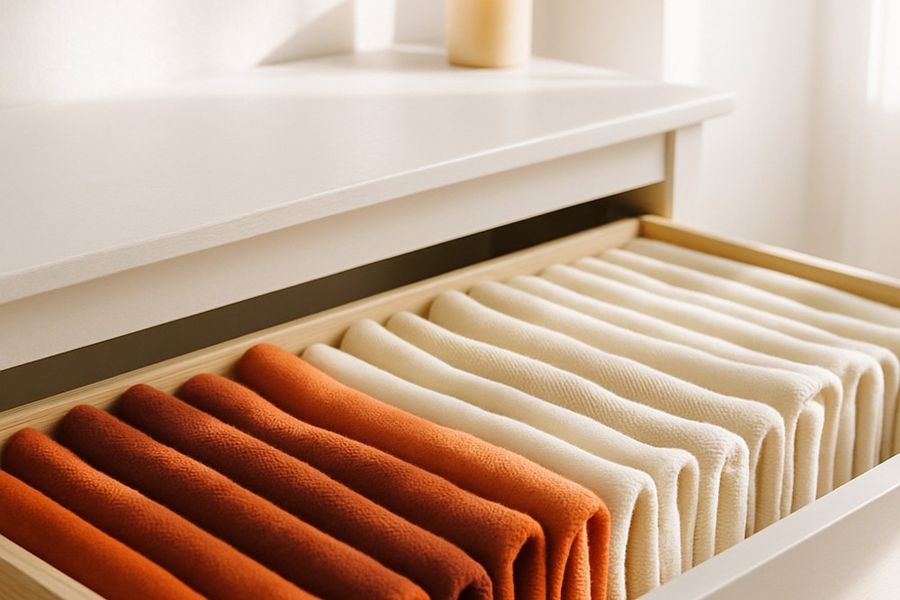
Here is a thing that happens to almost everyone: you buy a set of drawer organizers that look perfect online, they arrive, you try to fit them in the drawer, and they are either too wide by half an inch or so narrow they rattle around like loose change. You shove them in anyway, tell yourself it is fine, and six weeks later the drawer is chaos again. It is not fine. And it was completely avoidable. Choosing drawer organizers that actually fit comes down to a few specific steps done in the right order. Measure first, shop second, arrange third. This guide walks you through each one so you stop wasting money on organizers that almost work.
Start With Your Drawer Dimensions, Not the Product Page
Before you look at a single product, grab a tape measure. Write down three numbers for every drawer you want to organize: interior width, interior depth (front to back), and interior height.
Width and depth are obvious. Height matters more than people expect. Some organizers, especially the taller bins, will prevent the drawer from closing if the height clearance is tight. Measure from the bottom of the drawer to the lowest point of whatever is above it when the drawer is closed. In most kitchen drawers that is the underside of the counter. In dressers, it is often the drawer frame itself.
Do this for every drawer you plan to tackle. Write the measurements on a piece of tape and stick it to the front of each drawer. Yes, really. You will thank yourself at the store or when you have twelve browser tabs open.
Understand the Two Types of Fit: Exact and Modular
Drawer organizers generally fall into two categories, and knowing the difference saves a lot of frustration.
Exact-fit organizers are designed for a specific drawer type, most commonly kitchen silverware or utensil drawers. They come in set sizes and work beautifully when your drawer matches. The Silverware Drawer Organizer (9-Slot) is a good example of this kind of piece: defined slots, a fixed footprint, works best when you measure first and confirm the fit before buying.
Modular organizers are sold as sets of individual bins or trays in a range of sizes that you combine yourself. and Clear Drawer Organizer Set (25-Piece) both follow this approach with 25-piece clear plastic sets. You mix and match sizes to fill the drawer space efficiently. This style works for almost any drawer because you are building the layout, not fitting into someone else's.
If your drawers are standard sizes (most kitchen drawers run 12 to 30 inches wide), you have good options in both categories. If your drawers are odd sizes, go modular every time.
The Gap Rule: How Much Empty Space Is Acceptable
A small gap between your organizer arrangement and the drawer wall is fine. Organizers shift and tip when there is too much room, though, and that undoes the whole system.
As a general rule, try to keep any single gap under one inch on the sides and under two inches at the back. If you have a wider gap, fill it with a narrow bin from the same modular set, a folded piece of non-slip drawer liner, or a small secondary organizer.
Expandable organizers solve the side-gap problem entirely. The Bamboo Expandable Drawer Organizer bamboo expandable organizer is built specifically for this: it stretches to meet the drawer walls so there is nothing rattling around. These are especially useful in drawers where the width is between standard sizes.
Match the Organizer Material to the Drawer's Job
Clear plastic is the workhorse of drawer organization. You can see everything at a glance, it wipes clean easily, and it works in almost any context from junk drawers to bathroom drawers to desk drawers.
Bamboo looks better and holds up well in dry environments. The Bamboo Kitchen Drawer Dividers (4-Pack) bamboo drawer dividers are a great fit for kitchen drawers where you want something that does not look purely utilitarian. My fiance made a strong case for bamboo in the kitchen and, fine, they were right. It does look considerably better than a pile of plastic bins.
For jewelry and small accessories, something more considered makes sense. The Wooden Jewelry Organizer Box (5-Layer) wooden jewelry organizer box is purpose-built for that use and keeps small items from sliding around.
Avoid fabric organizers inside drawers unless the drawer is very shallow and holds only soft items like folded scarves or socks. Fabric compresses, loses its shape, and does not define zones the way rigid materials do.
Plan Your Layout Before You Buy
Once you have your drawer measurements, sketch out the layout on paper before you order anything. This sounds fussy but it prevents the most common mistake: buying too many of one size and not enough of another.
Think about what goes in the drawer and group items by size and frequency of use. Things you reach for every day should be at the front. Less-used items go toward the back.
For a typical kitchen utensil drawer around 24 inches wide by 21 inches deep, a workable layout might include one large bin for spatulas and tongs, two medium bins for smaller tools, and two or three small bins for items like peelers or a can opener. Sketch the rough dimensions of each bin and see how they add up against your drawer measurements before you click buy.
The Utensil Drawer Organizer (5-Slot) five-slot utensil organizer is worth measuring against your drawer if you want a single-piece solution for a standard-size utensil drawer.
Don't Forget Drawer Liner
Liner is not glamorous but it matters. Without it, organizers shift every time the drawer opens and closes, especially in smooth-bottomed drawers.
Cut liner to fit the full interior of the drawer before you place your organizers. Non-adhesive ribbed liner works well because it grips both the drawer bottom and the organizer without leaving residue. Adhesive liner holds more firmly but is harder to remove when you want to reconfigure.
One roll of liner usually covers four to six average-size drawers. Buy it before your organizers arrive so you can install everything at once.
The Test Before You Commit
When your organizers arrive, do a dry run before you put anything in them. Place the empty bins in the drawer in your planned layout, close the drawer fully, open it, and check that nothing shifts. Then load the items in and repeat.
If the drawer binds or does not close completely, the organizer height is the culprit. Remove the tallest piece and see if that solves it. If items are tipping or sliding, add liner or fill the gaps.
This takes ten minutes and saves you from living with a system that is almost right. Almost right is the enemy of actually right, and I have strong feelings about this.
The takeaway: The reason most drawer organizers fail is not the product, it is the order of operations. Measure the drawer, plan the layout on paper, then shop. Use modular systems when your drawers are non-standard sizes and expandable organizers when you need to eliminate side gaps. Liner is not optional. And do the dry run before you commit. Get those steps right and your drawers will stay organized without you having to redo them every few months.
Everything mentioned in this guide

Bamboo Expandable Drawer Organizer
View product →
Bamboo Kitchen Drawer Dividers (4-Pack)
View product →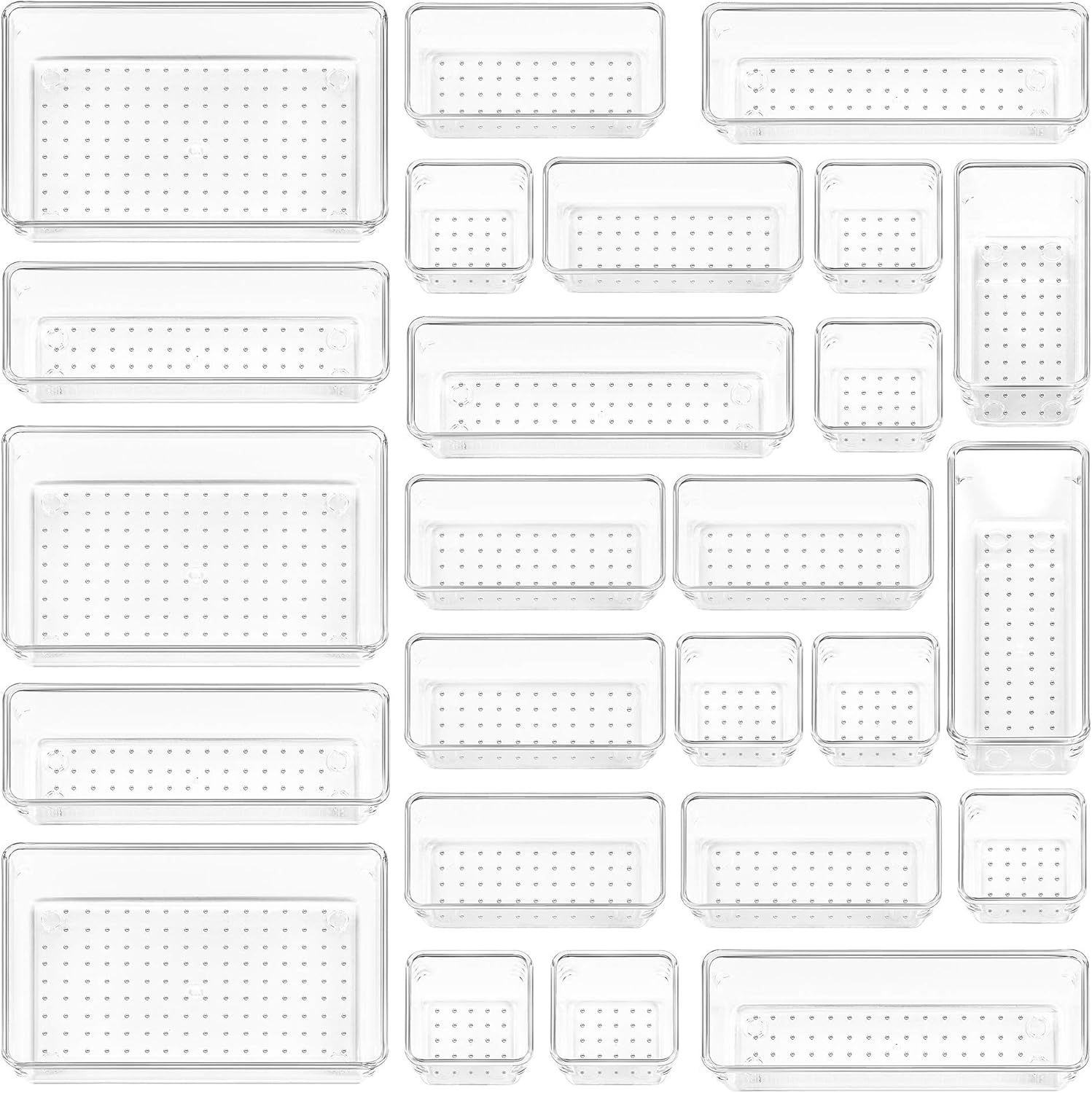
Clear Plastic Drawer Organizers (25-Piece Set)
View product →
Clear Drawer Organizer Set (25-Piece)
View product →
Silverware Drawer Organizer (9-Slot)
