Cabinet Door Storage: The Most Overlooked Space in a Small Kitchen
Last updated: 2026-07-15 · 6 min read
When you are working with a small kitchen, every square inch counts. You have probably already reorganized the shelves, bought some drawer dividers, and stacked things as efficiently as physics will allow. And yet somehow there is still not enough room. Here is the thing: you have been ignoring the inside of your cabinet doors this whole time. That flat, vertical surface is essentially free real estate. No drilling into walls, no buying new furniture, no negotiating with a fiance about whether something looks good (more on that in a minute). Just space you already own, waiting to be used.
Why Cabinet Doors Are Such Valuable Real Estate
The inside of a cabinet door gives you vertical storage that does not compete with your counters or your shelves. In a standard kitchen, a 12-inch-wide cabinet door has roughly 80 to 100 square inches of usable interior surface once you account for the door frame and hinge clearance. Multiply that across five or six cabinet doors and you have reclaimed the equivalent of an entire shelf unit.
The key reason most people skip this space is they do not think about it until the door is closed. The solution is simple: open every cabinet door in your kitchen right now and look at the inside. That blank panel is your starting point.
Measure Before You Buy Anything
Before you order a single organizer, take three measurements per door: the width of the flat interior panel (not the full door, just the recessed area if there is one), the height from top hinge to bottom hinge, and the depth of the cabinet itself. That last number matters a lot. If your shelves sit close to the door, a mounted organizer that sticks out two inches will collide with your dishes when you close the door.
A good rule of thumb: if your shelf items sit within one inch of the door interior, stick to flat or slim-profile organizers that extend no more than 1.5 inches. If you have two or more inches of clearance, you have real options.
The Best Things to Store on Cabinet Doors
Not everything belongs on a cabinet door. The best candidates are lightweight, frequently used, and awkward to store flat. Think spice packets, pot lids, cleaning supplies under the sink, plastic wrap and foil boxes, and small tools like a peeler or a can opener.
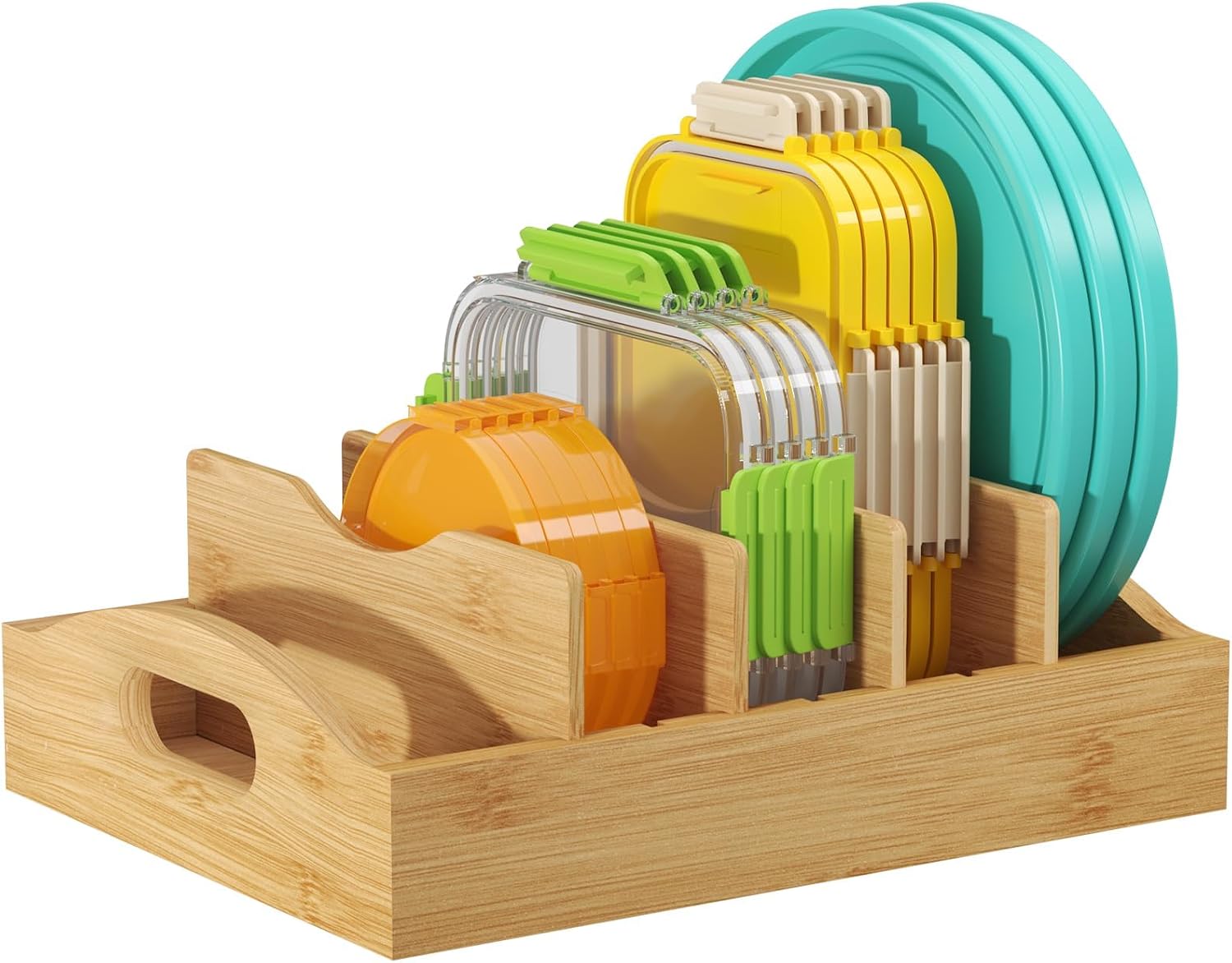
Pot lids are a personal obsession of mine. They slide around, they nest badly, and they always seem to be the thing blocking what you actually need. Mounting a lid organizer on the inside of a lower cabinet door solves this completely. The Bamboo Food Container Lid Organizer is designed exactly for this and keeps lids vertical and accessible without taking up any shelf space.
Under the sink is another underused door. The cabinet under the kitchen sink usually has a wide door and plenty of clearance because the plumbing limits how much you can stack inside anyway. This is a perfect spot for a door-mounted organizer holding dish soap refills, sponges, and scrubbers.
Choosing the Right Mounting Method
There are three main ways to attach organizers to cabinet doors: over-the-door hooks that grip the top edge of the door, adhesive mounts, and screws. Each has tradeoffs.
Over-the-door options are the easiest to install and remove, but they only work on cabinet doors thick enough to grip, and they can scratch the finish over time. Adhesive mounts like Clear Adhesive Wall Hooks (12-Pack) are great for lightweight items and smooth cabinet surfaces; they go up in seconds and leave no holes if you ever change your mind. Screws are the most secure and work for anything heavier, but they are a one-way commitment.
For most rental-friendly setups or anyone still figuring out their system, I recommend starting with adhesive hooks and a lightweight organizer. Once you know the layout works, you can upgrade to screws.
Setting Up the Under-Sink Cabinet Door
The under-sink cabinet is usually the most chaotic spot in a small kitchen, and the door is almost always completely bare. Start by emptying everything out, wiping down the interior, and grouping items by category: cleaning products, trash bags, sponges and scrubbers, and anything else you keep down there.
Mount a multi-shelf organizer on the door itself for the flat, lightweight items you grab most often. A simple over-the-door shelf unit like the Over-the-Door Hanging Organizer (5-Shelf) can hold sponges, dish soap, a scrub brush, and a spare bottle of cleaner without any drilling. Pair it with the 2-Tier Under-Sink Slide-Out Organizer inside the cabinet for the bulkier supplies, and suddenly that under-sink situation is genuinely solved.
My fiance and I had a long debate about this one. They wanted everything hidden and seamless; I wanted everything labeled and at eye level. We landed on the door organizer for daily-use items only, which keeps it uncluttered enough to pass the aesthetic test and functional enough to pass mine.
Organizing Spices and Small Packets on Cabinet Doors
Spice storage on cabinet doors works best on upper cabinets near the stove, where you actually reach for seasonings while cooking. The organizer needs to be shallow enough to clear your jars when the door closes, typically no more than two inches deep for standard cabinet depths.
For loose spice packets, seasoning envelopes, and single-serve items, a small pocket-style organizer keeps things from getting lost in a drawer. If you use a lot of bottled spices, a magnetic spice rack that mounts flat against the door is another option. The Magnetic Spice Rack for Fridge (4-Pack) is designed for the fridge but works just as well on a painted metal or steel cabinet door surface if yours will hold a magnet.
Whatever you use, group by category and keep the most-used spices at eye level. Yes, I put mine in alphabetical order within each category. No, I will not be taking questions.
Making It a System, Not Just Clutter in a New Location
Cabinet door storage fails when people treat it as overflow parking for things they do not know where else to put. The goal is to intentionally assign specific items to specific doors so that everyone in the household knows where things live.
Decide which door holds which category before you install anything. Write it down or, if you are me, print a small label for the inside of each door listing what belongs there. Then stick to it. When you add a new item to the kitchen, ask whether it belongs on a door or somewhere else before it lands on the counter permanently.
The test for whether your door system is working: you should be able to find what you need in under three seconds with the cabinet open. If you are digging around, reorganize the assignment, not just the arrangement.
The takeaway: Cabinet doors are the most consistently wasted storage surface in a small kitchen. Measure your clearance, match the organizer to the job, and assign each door a specific purpose. Start with one door this week, get it working, then move to the next. You do not have to overhaul the whole kitchen at once. You just have to stop walking past all that unused space.
Everything mentioned in this guide
Bamboo Food Container Lid Organizer
View product →
Over-the-Door Hanging Organizer (5-Shelf)
View product →
2-Tier Under-Sink Slide-Out Organizer
View product →
Clear Adhesive Wall Hooks (12-Pack)
View product →
Magnetic Spice Rack for Fridge (4-Pack)
View product →